
Lyme Ticks and Ladybugs

For nine to ten months each year the male bowerbirds of New Guinea work on their bowers. The style of the bower depends on the species. “Maypole” builders place hundreds of sticks around a sapling, winding up with a great mushroom-shaped structure. Other birds create “avenue” bowers, vertical rows of twigs imbedded in the earth between a narrow passageway. After construction, some of the more fastidious males will use their sharp beaks to paint the inside walls with plant juices. Finally, the birds begin to decorate, using whatever strikes their fancy: hunks of moss, red berries, silver snail shells, golden leaves, flowers, feathers, stones. Their whimsy extends even to manmade items: discarded batteries, toothbrushes, coins, nails, rifle shells, pieces of glass, strips of cellophane. Color is important. Some bowerbirds favor blue tones, while others prefer white or orange. Work is never quite finished; the birds spend weeks rearranging their treasures and adding to the plunder―stealing from one another is a common practice.
And the purpose of these sylvan palaces? It’s the same old story: seduction. Year after year these indefatigable birds give everything they’ve got for the chance to spend a few glorious seconds on the back of a female. Rich in suitors, the female bowerbird flies from one endeavor to another, assessing and rejecting, till she finally lands on the threshold of the bower she likes best. Sometimes she obliges the waiting male right away; other times she requires coaxing and the frenzied male will offer her gifts, a blue paperclip, an orange leaf. If these fail him, he will strut back and forth, extending his wings and chattering loudly so that she can see what a superb specimen he is. Many females end up selecting the same male and returning to him the next year, paring the chances for the other males whose efforts are nonetheless worthy.
So what becomes of all the bowers that don’t make the cut? Do they fall into disrepair, victims of time and weather? Or do the builders themselves do the dismantling, starting from scratch each fall, their bird brains brimming with fresh ideas?
I have no trouble believing that the initial impulse to build a bower is a reproductive imperative. At some point, though―perhaps after the forty-eighth golden leaf, the first dozen blue parrot feathers—I think this primal urge is forgotten and what drives the male after that is his own enthusiasm, craft turned to ecstasy. For what difference would it make to the no-nonsense, time-constrained female that there are thirteen parrot feathers instead of twelve, or that the interior, which she may not even bother to inspect, is freshly painted?
Only to the builder does every leaf and feather matter; each year, from fall through spring, nothing matters more. That his work may be in vain is something he is not prepared to ponder.
People, on the other hand, expect reward. The formulas we are taught—hard work equals success, healthy living ensures longevity, good deeds bring good luck―these ideas die hard and not without bitterness. Our house is blown away; the tumor is malignant; the dog we adopted gets hit by a car. “It’s not fair,” we cry; moreover it doesn’t make sense. Why would God allow such things? Why are we sharing our home with polio and salmonella and brown recluse spiders? Where is the virtue in poisonous toadstools and powdery mildew? Indeed, our madcap inventor seems to have as much interest in the growth of a fungus as he does a fetus.
Whatever your religious views, one thing is certain: a long time ago this ball got rolling and a force we can’t fathom gave it the nudge. From that point on, life never looked back.
Consider the extravagance of species on this planet: 140 kinds of sparrows, and every one of them changing, each generation bringing better beaks, designer tails, new come-hither stripes. So many versions of a small brown bird, all of them vying for a little more time. Why not, say, a dozen species? Wouldn’t that be a sufficient sparrow allotment? Why is the earth burdening itself with this colossal balancing act?
Watching children play or dolphins leap or eagles soar, it’s easy to conclude that life is fun, that we are put here to enjoy ourselves. Take male lions, which spend their days on grassy plains, dozing in the sun, dining on warm fresh prey, thanks to the prowess of their harems. Then take a look at male emperor penguins, which spend long winters on open ice, huddled together for warmth, risking starvation, a single precious egg balanced on their frigid feet. A tortoise trudges along for well over a century; a mayfly gets less than a day. One bird scores a mate with just a couple songs, while another must build a palace. Not one of these creatures knows the difference. “Why” is a question we might all do without.
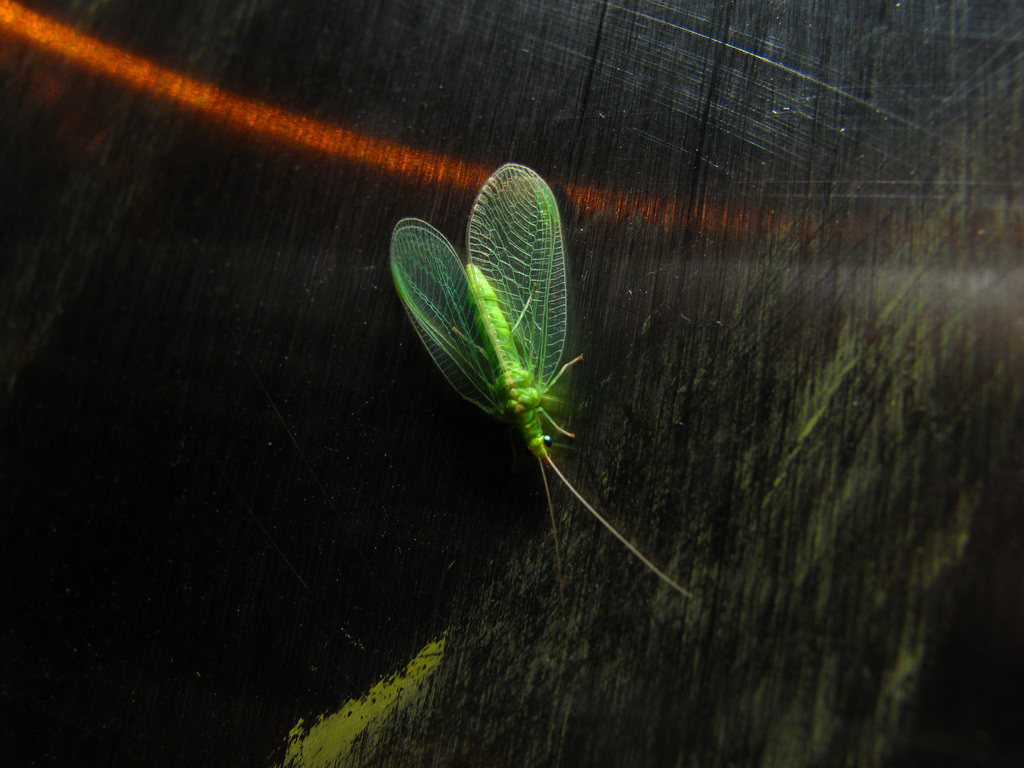
To be born is to have worth. Lucky or not, lovely or not, everything on this busy blue orb gets a fighting chance to do its best. Rust and roses. Slugs and swans. Lyme ticks and ladybugs.
Does it feel good to be a ladybug? We can’t say. All we can witness is the effort: one tiny being earning its life.
It hurts to be alive, too much and too often for pleasure to be the point; much of the time we manage without it. Now and again we are taken by surprise. In the oddest moments—spreading mulch, washing a plate, buttoning a child’s coat—we are suddenly, inexplicably, happy. For the bowerbird, whose life amounts to little more than labor, the joy is built right in.


 Jean Ryan