“Greyhound” in The Bosque Beast

copy41_Greyhound hed

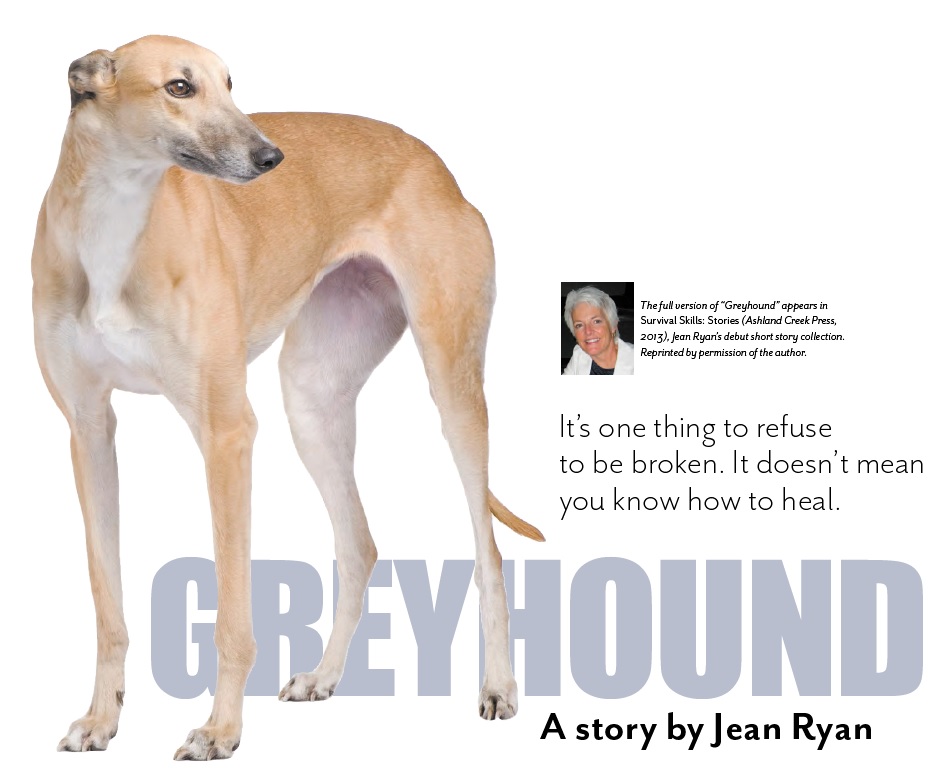
My deep thanks to editor Keiko Ohnuma for publishing this excerpt of my story “Greyhound” in the latest edition of The Bosque Beast, a journal dedicated to bringing awareness to the plight of animals. “Greyhound” is included in the story collection SURVIVAL SKILLS, published by Ashland Creek Press. I am proud to have my work recognized by people who care so deeply about animals and the beautiful, fragile world we live in.


Helping Honey Bees

file000377663194

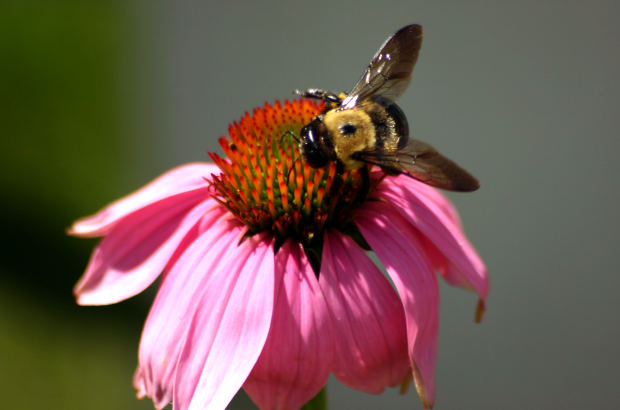
President Obama has just created a task force to research the alarming problem of honey bee deaths, commonly referred to as colony collapse disorder. The Pollinator Health Task Force is charged with addressing issues surrounding the plight of honey bees and other important pollinators such as monarch butterflies.

Better late than never. Maybe. Meanwhile various environmental groups are filing suit against CA’s Department of Pesticide Regulation for continuing to approve neonicotinoids, a group of seven chemicals which are highly toxic to honey bees.

As we cannot count on corrupt politicians to stop the manufacture of these products, we must do it ourselves by not buying them. Here is a list of pesticides to avoid. For more information, please visit the Xerces Society.

Examples of Neonicotinoid Garden Products Used in the United States

Bayer Advanced 3-in-1 Insect, Disease, & Mite Control

Bayer Advanced 12 Month Tree & Shrub Insect Control

Bayer Advanced 12 Month Tree & Shrub Protect & Feed

Bayer Advanced Fruit, Citrus & Vegetable Insect Control

Bayer Advanced All-in-One Rose & Flower Care concentrate

DIY Tree Care Products Multi-Insect Killer

Ferti-lome 2-N-1 Systemic

Hi-Yield Systemic Insect Spray

Knockout Ready-To-Use Grub Killer

Monterey Once a Year Insect Control II

Ortho Bug B Gon Year-Long Tree & Shrub Insect Control

Ortho MAX Tree & Shrub Insect Control

Surrender Brand GrubZ Out

Clothianidin Granules for turf, and ornamental flowers, shrubs, or trees. Bayer Advanced All-in-One Rose & Flower Care granules
Green Light Grub Control with Arena

Thiamethoxam Foliar spray for turf and ornamental flowers, trees, and shrubs; granules for turf and ornmanetal flowers, trees, and shrubs. Amdro Quick Kill Lawn & Landscape Insect Killer
Amdro Rose & Flower Care

Maxide Dual Action Insect Killer

Acetamiprid Foliar spray for garden fruits and vegetables, and ornamental flowers, trees, and shrubs. Ortho Bug B Gon Garden Insect Killer
Ortho Bug B Gon for Lawns

Ortho Flower, Fruit and Vegetable Insect Killer

Ortho Rose and Flower Insect Killer

Ortho Rose Pride Insect Killer

Dinotefuran Granules for turf and ornamental flowers, shrubs or trees; soil drench for ornamental flowers, trees, and shrubs. Green Light Tree & Shrub Insect Control with Safari 2 G
Safari

Ortho Tree & Shrub Insect Control Plus Miracle Gro Plant Food

Subtle Energy

Physicists tell us that thoughts, like everything else in the universe, are a form of energy. The more we dwell on something, the more energy we give it, and this energy spills out of us and into the world.

Yesterday I happened to see a deer and two fawns munching my agapanthus buds. I kept very still behind the window, and they did not know they were being watched. Eventually they moved off, carefully, gracefully, looking this way and that, before trotting across the street and disappearing into whatever hidden pockets they came from. It’s a miracle they are managing to find places to give birth, considering all the space we have taken from them. I regard my agapanthus flowers as an apology: the deer can have all they want.

It’s the effort that breaks my heart, the way animals make solid use of what’s left. At the nursery where I work, two house sparrows have made a nest in a privet topiary. From the birds’ point of view, the advantage of that dense green ball—excellent coverage—outweighs the disadvantage—foot traffic. Each time a customer traipses by, the mother, alarmed and fierce at once, flies out of the privet and onto a nearby roof from where she gives a series of warning chirps. This may not have been the best option available to the sparrows; then again, it may have involved more consideration than we think. Maybe our cooperation was something the birds factored in. Not only do we give that privet a wide berth, we have put a Sold sign on it which will stay in place until the young fly away. (We’ve also had to sequester more than a few hanging asparagus ferns—a plant to keep in mind if you’re interested in helping house sparrows.)

And then there are the baby katydids I find each year on the leaves of my lilac bush. There is just a handful of them, and they don’t eat much, certainly no more than they need, and before I have time to adequately admire their miniature beauty, they are gone.

In my collection SURVIVAL SKILLS, I explore the ways in which humans and the natural world intersect. If thought is a form of subtle energy, maybe animals, with their heightened senses, can tune into it. Maybe the deer I watch from my living room can feel my unceasing praise, and maybe this admiration strengthens them, the way love profits everything.

iStock_000015604178XSmall


“How Long Does It Flower?”

“How long does it flower?” I hear this question over and over, especially in the springtime when many plants are in glorious bloom. “A few weeks,” I reply, and the customers lose interest immediately. “Is that all?” they say.

“But look at the foliage,” I tell them, rushing to the plant’s defense. I point to a peony’s lovely-shaped leaves. “This plants stays lush and green until mid-fall.”

“Then what?”

“Then it goes into dormancy.”

“It dies?”

“No, it turns brown, but it comes back very early each spring.”

The customers shake their heads. “Oh no. I need something that stays green all year.”

“Well, you could plant azaleas or rhododendrons, or camellias.”

“Do they flower?”

“Absolutely.”

“How long?”

Basically, people are looking for eternal youth: a plant that stays beautiful forever. Mother Nature knocks herself out to give us breathtaking blooms, and we are not happy. Will we ever be? Will we ever look at the world, at ourselves, and see the hidden value?

Even more miraculous is a plant’s ability to come back from dormancy, to flower year after year. This is what our green world offers us: a fresh chance each spring to put things in perspective and be thankful for what is. What a gift.

!cid_5B9A7890-D230-4A7A-90F8-23B2CAA178E4@gateway_2wire


Among Animals

amonganimals_250As one of the contributors, I am delighted to announce the official launch of AMONG ANIMALS, a new collection of stories published by Ashland Creek Press.

“This diverse collection of stories explores the ways in which we live among—and often in conflict with—our non-human counterparts. These stories feature animals from the familiar (dogs and cats) to the exotic (elands and emus), and in these stories animals are both the rescuers and the rescued. Within these pages are glimpses of the world through the eyes of a zookeeper, a shelter worker, a penguin researcher, and a neighborhood stray, among many others—all highlighting the ways in which animals and humans understand and challenge one another.”

This compelling new book is available in paperback or digital form and is available for purchase now.


Carte Blanche

Thank you for alerting us to this.

Gator Woman's avatarWalking with the Alligators

rightwhales3

A Right Whale mother and Calf


With this most recent  seal of approval, the US Navy is now  free to deafen, maim and murder sea life in both the Atlantic and the Pacific.

They have been given Carte Blanche.

The might of our Military will now be allowed to forge ahead full steam,  knowing well the consequences of their actions and leaving  little doubt that in this country at least,  the hammer will now be allowed to fall on those least able to protest.

The Navy’s war on whales  has been waging for years now and groups from all parts of the world have lent their voices in support for  them and other at-risk sea life,  who are being harmed by these reckless and cruel actions.

Time and time again, US Courts have taken the side of the Navy,  to the great peril of all ocean dwelling animals.

Along our Florida Coast,  the Right Whale  who comes…

View original post 186 more words

A Frugal Life

!cid_BC673229-1BA1-431B-B3B0-F4D30CD7A4D6@gateway_2wire

This is my air plant, specifically Tillandsia bulbosa, native to Belize and Guatemala. The twisted branches fascinate me, the way they seem to be searching the air for something, anything, to live on: rainwater, leaf debris, bird droppings, dust. These are not needy plants. Weeks of neglect will leach their color and turn them spongy, but after a long soak in a bowl of tap water, they are firm and strong again. They can even do without their tuft of roots, which only serve as an anchor. Everything they need is absorbed through the suction scales that line their branches. Day and night, these plants are ready, accepting whatever windfalls come their way. If drought occurs, they simply shrink and wait.

Spanish moss, another type of Tillandsia, doesn’t bother with roots. It just drapes itself over a limb and hangs there, resisting nothing. Rain washes the nutrients off the leaves of the tree, and the moss catches this nourishing rainwater in its tiny cupped scales. Like the canary in the coal mine, Spanish moss is so proficient at absorbing elements that analysis of local specimens can reveal the extent of metallic pollution.

Bulbosas bloom just once before dying, but as their rainbow flowers emerge, they send out “pups,” baby plants attached to the mother’s base. In a year’s time, these new plants have plants of their own, and so the clumps can grow large and luxurious, the living and the dying in perfect accord.

2216144287_b0569da1a9

Willing. Resourceful. Irrepressible. I’m learning a lot from this plant.

Accountable

This is an excerpt from a forthcoming short story on the ways in which people intersect with nature, with unexpected results.

This morning I was having coffee on the deck when I noticed a spider web, about the width of a grapefruit, strung up between two of my potted vegetable plants. Three minute strands stretched from either side, anchoring a tightly rigged web of breathless perfection, each miniscule partition exactly the same. Sitting in the middle of the web was an auburn spider the size of a pea. If the light had come from a slightly different angle, if I had not been looking that way at that instant, I would have missed him altogether and my world would be unchanged.

Nothing had flown into this web, at least not recently, and I wondered if the spider was hungry and how long he went between meals, and if every web he made was this exquisite, and if they were all productive or if some webs proved worthless, and if a spider could become disheartened. A tiny movement on the periphery turned my attention to another bug, a green beetle with black stripes crawling out of a yellow cucumber flower. Knowing these beetles are trouble, I plucked it from the plant and held it between my thumb and forefinger, regarding the waving twin hairs of its antennae and the tiny hooked feet. It was nearly the size of the spider, and I thought what a feast it would be. I looked from one to the other. Here was the problem, here the solution. I could help a beneficial species and practice organic pest control at the same time.

Still, I had to get up the nerve to toss the beetle at the web; I was half hoping it would bounce off. It didn’t. It stuck fast. In a blink, the spider shot down the web, seized the poor thing and stilled it just like that. Expertly, rapidly, the spider then began wrapping the carcass, enfolding it in sticky strands. In less than ten seconds the beetle was a white mummy, and the spider, more leisurely this time, returned to the center of its web.

I’ve crushed more than few troublesome bugs under my shoe, and I’m not sure why this death was so disturbing. Maybe because I trespassed, bullied my way into a place not designed for me, used another innocent creature to do my dirty work. How can I apologize? God was the only witness.