For three months of my life, I lived on the west shore of Lake Tahoe in a cabin with no insulation in a town with just one market where I stocked groceries on frozen mornings while my partner helped people on and off ski lifts. There was nothing else to do that winter but feed the wood stove and walk our dog, and of course we had sex, lots of it, because that is what you do when you are 23 and poor and trying not to notice the big mistake you made. We were sick most of that stretch, and the firewood ran out, and even the dog grew snappy, and still we hung on like there was a point. When we finally succumbed, loaded the car and headed back to Berkeley, those cold blue days were tied to our bumper, though it took us some time to notice.
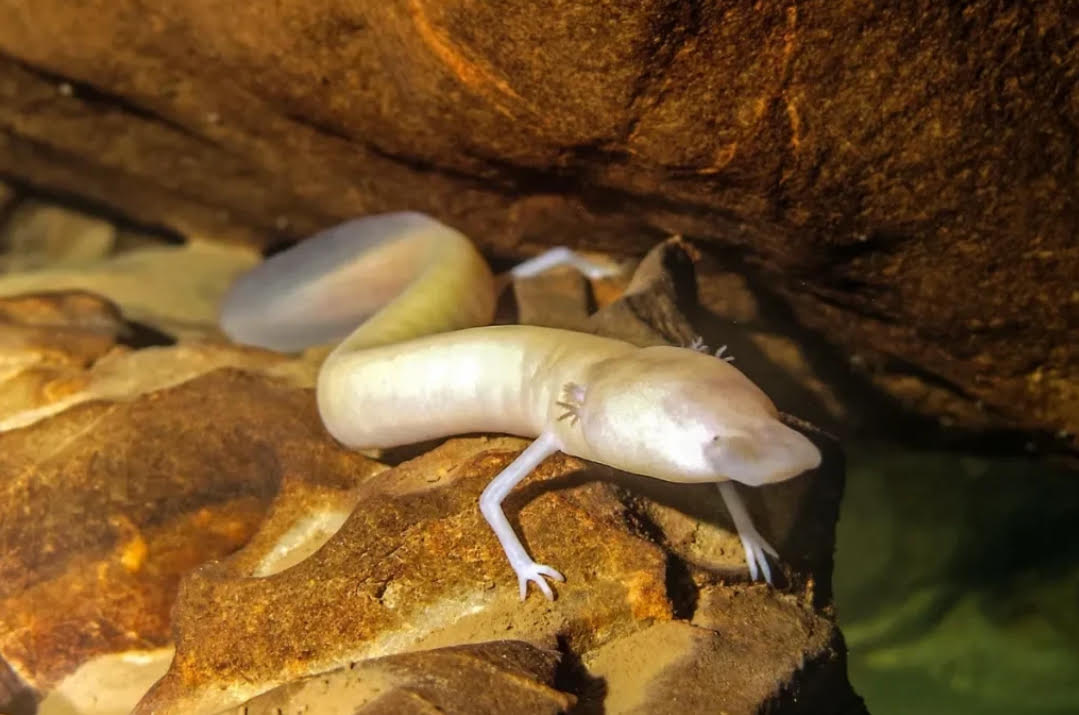
To all the creatures yet unknown, moving under miles of ice, inching through slippery caves, crouching in forests on moonless nights: Live on. Let no one find a trace. Keep to the dark side of mountains, swim where no man can follow, burrow as deep as you can. Stay where we don’t belong.
I don’t recall his name or his face, only that he was good looking, not in a steely, square-jawed way, but a softer sort of handsome that suited his shyness. What I do remember is that he was tall and slim and missing half an arm— a tractor accident, his roommate confided.
We never spoke of it, never said much of anything, though he was always polite, grateful, I guess, to have someone doing the legwork, the facetime. His family had a farm in the mountains and that’s where I imagined he tended his secret garden. I stopped by his dorm room a couple times a week to pick up baggies of marijuana which I sold on campus in no time at all, earning shares of my own. I can still see his long back as he weighed each bag, the blue flannel shirt he wore, one sleeve moving swiftly, the other hanging useless.
I could not pick him out of a yearbook, this boy I never knew. Yet there he is, stowed in my past, where the rest of his life can’t hurt him.
With deepest thanks to Robert Eugene Perry, founder of Metaphysical Fox Press, I am announcing the publication of my new poetry chapbook. “In This Vanishing Time” is a collection of 30 poems that explore the human condition and the ways we are shaped by the quiet mysteries that make up our days. Available as a hard copy and an ebook soon, you can find this publication on Amazon.
Please visit the Metaphyical Fox Press on Facebook. Bob Perry is a dream to work with, friendly and professional at once, with a love of literature and an impressive knowledge of the publishing world.
Deep thanks to editor Neil Slevin for publishing my poem “Trip Into Town” in the current issue of Dodging The Rain.
Dodging the Rain evolved into a poetry journal, having been founded and edited by MA graduates of NUI Galway (Áine Ni Mhaoileoin, Rebecca Spicer, and Neil Slevin) and Uversity (Dana Rabe) in 2016. It’s an internet platform that showcases poetry to the world but Galway, Ireland is its spiritual home.
I am beyond thrilled to announce the publication of my poetry collection A Day Like This. A printed edition of A Day Like This is now available through the Kelsay Bookstore or Amazon. For those who prefer an expedited (and more budget-friendly) version, the ebook will be ready in just a few days and I will make another announcement then. Ratings and comments, however brief, are deeply appreciated. https://tinyurl.com/27w32z27
“In the title poem of Jean Ryan’s luminous new collection, her speaker sees swallows slicing the air, observing, ‘Short dark arrows, they never miss, their flight too swift for error.’ I can’t think of a more apt description for A Day Like This, in which poem after poem so vivdly penetrates to the core of lived experience. Ryan’s poems have an ease of movement and transparency of structure I find most enviable. She has a special gift for finding what remains fresh and particular inside the ancient stuff of poetry. This is a gorgeous book, powerful and assured, written by a poet who is elegant, concise, honest, and warmhearted in her approach. I can’t recommend it enough. A quietly masterful work.” Erin Belieu, author of Slant Six, Black Box, Come-Hither Honeycomb, and One Above and One Below.
I’ve seen what the bite of a brown recluse spider can do; a friend of mine lost a chunk of his thigh that way. The bite of a black widow spider can be gruesome too—scroll through a few internet photos. When outhouses were still common, so were black widow bites, and men, with their thin-skinned, unprotected genitalia, were especially vulnerable. I can’t imagine a more abrupt wake-up call than a spider bite to the scrotum.
Scorpions deliver venom through a stinger at the tip of their tails. Unchanged for eons, these arachnids have become a symbol of power and/or evil, their cautionary image appearing on countless artifacts. While bees have garnered a friendlier reputation, their stings are equally painful and in some cases fatal. Thirty times more painful than a bee sting is the pierce of a bullet ant, common in the rain forests of Nicaragua and Paraguay. Closer to home is the kissing bug, a creature that inhabits the American southwest and transmits Chagas, an infection that kills 12,000 people a year. Leading the pack of dangerous insects is the mosquito, whose disease-rich blood kills one child every half minute.
While all these treacherous creatures command respect, the bug that truly unnerves me, for its stealth, its guises, its casual cannibalism, is the praying mantis. Harmless to humans, this lanky assassin dispatches other insects with alarming speed and can even snatch hummingbirds from the air, a feat I hope never to witness.
Praying mantises are usually discovered by chance. Trimming a hedge, admiring a bloom, we become aware of a slim apparition poised on the periphery. Tan, green, brown or black (camouflage is one of their many endowments), mantises appear ominous in any color, and only the most hardened among us doesn’t startle at the sight of them. These creatures are gluttonous, their appetites keeping pace with their prowess, and some will explode their own abdomens in an orgy of greed. A mantis in the garden is a harbinger of doom: something is going to die, horribly and soon.
Mantises have triangular heads, a beaky snout and bulging compound eyes with which they can follow minute movements and zero in on their victims. A flexible neck allows them to turn their heads 180 degrees. Sometimes mantises camouflage themselves and wait for a luckless bug; other times they actively stalk, avid as egrets. A few fearsome ground species race across the dirt in pursuit of their panicked prey. A mantis’s forelegs are oversized and edged with spines, ensuring a solid hold on whatever they seize. Most species have two sets of wings, the tougher, outer set serving as armor for the more delicate hind wings. Though they are chiefly diurnal, they often fly at night, perhaps to avoid being eaten by birds. To elude bats, they employ a specialized auditory organ capable of detecting echolocation calls.
Mantises are masters of adaptation. Some Australian species will turn black after a molt, their coloration mimicking the landscape of fire season. Those that live on mono-colored surfaces have flattened bodies to eliminate their own shadows. Some resemble flowers, turning unwitting pollinators into easy pickings.
Female mantises are mercurial, one day allowing a mate to do his business and leave, another day chomping off his head, even before copulation has begun. The headless male is not deterred and will perform with more urgency. Occasionally the female will decapitate the male afterward, or eat him whole, bestowing a boost of nutrition on her prodigious progeny—as many as 400 eggs are produced. The frothy egg mass soon hardens into a winter-worthy case from which the nymphs emerge on a warm spring day, consuming each another as they stream into the world. Only about a fifth will survive their own savagery.
Some gardeners, wanting eco-friendly pest control, will purchase these egg cases and place them in the yard. The problem is, praying mantises do not discriminate; they will eat aphids and cutworms, along with lady bugs and butterflies. They just don’t see the difference.
I learned this up close last week when I spotted a praying mantis in my flower bed. Thrilled, I bent down for a closer look and saw with dismay that it was dining on a bee. A bee! Our most vital and endangered bug. I watched in horror as the mantis munched its way through the striped body. I watched until the end, until the last tuft of yellow fuzz was gone, and the last tiny pane of wing. Only then did the mantis turn its alien head and look up at me. For several seconds we peered at one another. It did not flinch, even when I raised my phone and snapped a picture.
At last it lowered its head, perhaps concluding I was too big to eat and thus of no value or interest. Then, cool as a cat, it lifted a foreleg and began grooming, neatly removing the last bits of bee.







 Jean Ryan