Unconditional Love

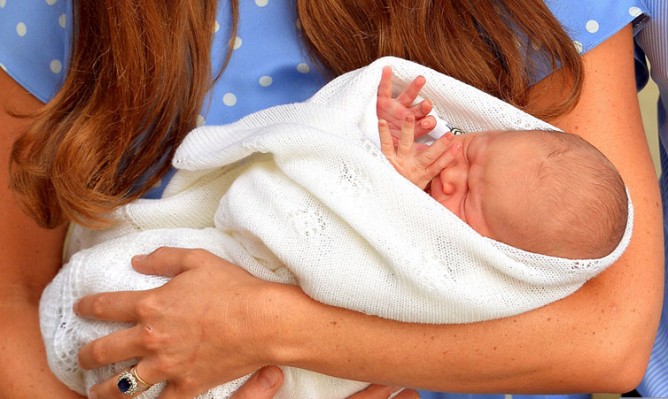
The royal baby has arrived!

Imagine being venerated by multitudes from birth, before birth, based solely on bloodline. On loan to his parents, Prince George of Cambridge belongs to Britain.

Nevermind whether he will want to be a monarch, or if he is suited for such a life, this baby is third in line for the throne and a king he will be. Unless of course he commits some royal blasphemy. Then again, Charles married a divorcee, so maybe the monarchy is loosening up.

Most Americans are tolerant of the pomp that attends these royal milestones. Some may criticize the inequities of a class-structured society; some may condemn the patriarchal policies; others may object to the phenomenal wealth and privilege enjoyed by a group of people who are only nominally in charge. But who would deny Queen Elizabeth’s dedication and probity? Who would discount her decades of unstinting service, or her belief in the importance of her destiny?

I think we may be a little jealous of that idealism, that unbreakable faith. Whether we believe in The Queen’s mission or not, she does, and in so doing, she gives the British people something to believe in, a standard to live by, a notion that some things are worth keeping.

Prince George will be swaddled in adoration and courtesy. His upbringing will be a collaborative effort, a painstaking labor of love. He will be groomed for excellence in the hope that one day he will be a man fit to be king.

I’m not sure I’d elect this noble life for myself—the security measures required, the lack of privacy—but there is something to be said for being the object of high expectation. What would the rest of us accomplish with that much encouragement? If we were told each day how fine we were, what kind of people might we be?

royalbaby-668x399

The Problem With Labels

On June 28, 2013 California became the 13th state to allow same sex marriage. This window of opportunity had been opened briefly five years earlier, but Prop 8 slammed it shut, stranding thousands of newlyweds. For five years these legally married couples tread water in a state that no longer allowed their unions. Two days after the Supreme Court’s historic ruling, same sex couples in CA were finally vindicated. Not only could they celebrate the renewed right to marry, they finally had access to genuine marriage, the kind with federal benefits, the kind enjoyed by….what’s the term? Straight couples? That’s a misleading adjective. Heterosexual couples? That’s a mouthful, and overly emphatic, don’t you think? Heterosexual. Homosexual. Why are we defined by our romantic preferences? How is this distinction socially significant, and how can it foster anything but division? That’s the problem with labels.

Take the term “civil union.” Many so-called Christians favor the idea of labeling same sex marriages as civil unions in order to distinguish them from.…real marriages? Why do we need two terms for the same condition? Marriage is a legal bond between two consenting adults. It is not the purview of any religion and cannot be usurped in defense of any religion. Whether you are wed in a place of worship, your own backyard, Las Vegas or city hall, you are legally united. Call it what you want, but call it one thing. For everyone.

The Supreme Court’s recent ruling on DOMA was not complicated. Legally married same sex couples filed a suit against the federal government on the grounds that they were being denied the benefits accorded other married couples. There are 1,138 federal benefits in all, ranging from tax advantages to pension, health and social security benefits. The Court ruled in favor of the claimants and struck down this key aspect of DOMA, declaring it unconstitutional. This decision was inevitable—life wants balance and is always moving in the direction of equality. The only surprise regarding the Court’s decision was the fact that it was not unanimous. No matter. It is done. It is law.

Given the prevalence of divorce in this country, given the shocking statistics on spousal battery and child abuse, shouldn’t we be looking for healthier examples of domesticity? The same sex parents I’ve met are wonderfully attentive and supportive of their children. Perhaps, having fought so hard for their right to be parents, this is a privilege they do not take lightly. Perhaps there are things to be learned from them. What this country needs are more expressions of love, not malice and vitriol. The Supreme Court has opened a door. This is a time of congratulations and celebrations. This is a chance to revel in our unity.

1000528_10200214949758572_148205324_n

The Ready Feast

This post originally appeared on a terrific review site, Booklover Book Reviews  http://www.bookloverbookreviews.com/

Why do most readers avoid short stories? I’ve posed this question to several people, who have offered a small range of reasons. Some say that short stories end too abruptly, or that they often have no resolution at all. Others mention a lack of plot, claiming that writers of this genre are more concerned with style than story. But the most common complaint is that short stories are simply too short. When it comes to reading material, people favor long-term investments and will not consider other options, even with the possibility of greater returns. “I make friends with the characters,” someone told me yesterday. “I want them to stick around.”

I find this both odd and poignant, basing the value of something on how long it keeps us company. You don’t see this more-is-better mentality applied to other art forms. A symphony does not trump a song, nor is a portrait less important than a mural, or a statue more impressive than a figurine. And poetry—no one accuses poems of being too short. I wish I could write poetry; the audience is small but ferociously loyal.

I understand the preference for novels only in theory. Being a writer, maybe my own characters edge out the competition, but I don’t think of characters as company—entertainers, yes;  companions, no. I ask other things of the people I meet in books. They must be credible, first of all, and informative, and interesting. No matter how scant the time I spend with them, if the author has succeeded, if the characters are well done, I will remember them, and their troubles, all my life.

Novels run the opposite risk, often drowning in their own excess. Sometimes, reading a novel, I get the feeling that the author is figuring things out bit by bit and I am wading through his thoughts, bumping into the clutter. While I’ve read many wonderful novels, I am in greater awe of the spare clean rooms, the potent distillation, of a good short story. There is a bounty of them, from the deliciously chilling tales of Edgar Allen Poe to the devastating brilliance of Annie Proulx’s Wyoming stories. At least once a year I reread Tim O’Brien’s “The Things They Carried” just to remind myself what a writer is capable of, and I am no less stunned by the short works of Jean Thompson, Antonya Nelson, Lorrie Moore, Joyce Carol Oates, John Updike, Alice Munro and so many others.

Despite these masters of the genre, the popularity of short stories has been declining for decades, and rare is the author who can make a living off them. Who would guess that in this age of texts and tweets, the short form would be struggling for attention? Maybe this techno world we live in is just the point. People need to escape, to lose themselves in more tantalizing realms, in which case, a short story can be the quickest route, the ideal restorative, the ready feast.

In their heyday, short stories appeared every month in popular magazines. Later they were found only in published collections or literary journals. Today, with increasing frequency, they are popping up in e-readers. Now that readers have an instant and inexpensive way to access short stories, I am hoping the genre will enjoy a renaissance, that people will set aside their fat beach reads, at least occasionally, and try something more slimming. Maybe even delicious.

Accountable

This is an excerpt from a forthcoming short story on the ways in which people intersect with nature, with unexpected results.

This morning I was having coffee on the deck when I noticed a spider web, about the width of a grapefruit, strung up between two of my potted vegetable plants. Three minute strands stretched from either side, anchoring a tightly rigged web of breathless perfection, each miniscule partition exactly the same. Sitting in the middle of the web was an auburn spider the size of a pea. If the light had come from a slightly different angle, if I had not been looking that way at that instant, I would have missed him altogether and my world would be unchanged.

Nothing had flown into this web, at least not recently, and I wondered if the spider was hungry and how long he went between meals, and if every web he made was this exquisite, and if they were all productive or if some webs proved worthless, and if a spider could become disheartened. A tiny movement on the periphery turned my attention to another bug, a green beetle with black stripes crawling out of a yellow cucumber flower. Knowing these beetles are trouble, I plucked it from the plant and held it between my thumb and forefinger, regarding the waving twin hairs of its antennae and the tiny hooked feet. It was nearly the size of the spider, and I thought what a feast it would be. I looked from one to the other. Here was the problem, here the solution. I could help a beneficial species and practice organic pest control at the same time.

Still, I had to get up the nerve to toss the beetle at the web; I was half hoping it would bounce off. It didn’t. It stuck fast. In a blink, the spider shot down the web, seized the poor thing and stilled it just like that. Expertly, rapidly, the spider then began wrapping the carcass, enfolding it in sticky strands. In less than ten seconds the beetle was a white mummy, and the spider, more leisurely this time, returned to the center of its web.

I’ve crushed more than few troublesome bugs under my shoe, and I’m not sure why this death was so disturbing. Maybe because I trespassed, bullied my way into a place not designed for me, used another innocent creature to do my dirty work. How can I apologize? God was the only witness.

Opening Day of SURVIVAL SKILLS

Today is a big day for me: the official release of SURVIVAL SKILLS!

For those interested in stories involving animals and the natural world, I think you’ll enjoy this collection, particularly if you enjoy this blog. For a sample, please download the opening story, “Greyhound.”

http://www.ashlandcreekpress.com/download/SurvivalSkills_Excerpt.pdf

And thank you for visiting this site. Your comments, likes and follows are much appreciated. Best of all, they provide me with a handy way to meet other bloggers and readers who care deeply about this planet and all its fascinating creatures.

Wishing you all a happy spring.

Cellular Memory

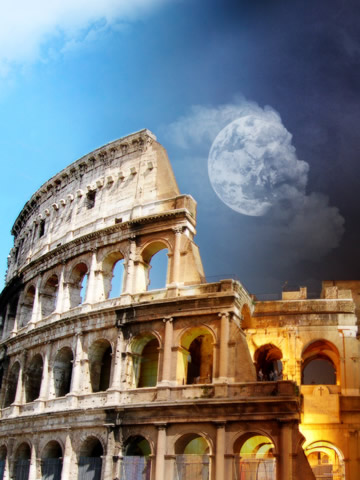
You can stop me in my tracks with a program or story about ancient Rome. My stomach flutters when I look at photos of the Coliseum, the Pantheon, the Forum, and imagine the people who filled them, 2000 years ago. Gazing at lustrous marble statues of curly-haired emperors,  elaborate friezes of grappling soldiers, I feel almost holy, as if I’m approaching important truths, closing in on a memory.

The cells in our bodies have age-old intelligence. Consider migration, the way in which a creature knows, from birth, precisely where to head. This innate intelligence works in the background, constantly informing us, keeping us alive. If a pathogen from the past resurfaces, our bodies know how to handle it. We are now learning that this cellular memory is also evident in organ transplant patients, particularly heart recipients, who will sometimes assume the habits, behaviors and preferences of their donors. Every breath we take and every bite we swallow is composed of atoms that have been here since the earth began. Perhaps we are stirred by the places and cultures we were once a part of. If you love the violin, your forebear might have played the lute.

So, along with my blue eyes and cautious ways, there’s a reasonable chance I was born with this tenderness toward ancient Rome. I once wrote a story about Pompeii and became lost in the research; for weeks I could think of little else, and even my dreams were filled with fire and pumice.

I have spent some time thinking about the Coliseum and what went on inside those massive walls. Commissioned by Emperor Vespesian in 72 AD, the project was completed eight years later. With a population of nearly one million, Rome was becoming unmanageable and agitation was on the rise. Vespesian hoped to quell the anger and gain popularity by staging deadly combats between gladiators, as well as animals fights—over nine thousand animals were killed in the inaugural games. If a gladiatorial struggle did not end in death, the presiding emperor would decide the fate of the fallen: thumb’s up or thumb’s down. Sitting in rows according to their social status, 55,000 Romans cursed and cheered as they watched the slaughter below. When the crowd grew more restive, the games grew more bizarre, but as the empire neared its end, nothing could appease the frenzied masses.

While there are many reasons for the fall of the Roman empire, the problems began with the politics. The Senate, designed to govern fairly and wisely, became riddled with corruption. Consuls and officials offered positions to those who could pay for them. Bribes were accepted in exchange for favors. Unscrupulous emperors took control, while merciless minions carried out their atrocities. At last, there was nothing for the masses to do but form coalitions against their own government and eventually overpower it.

Aside from a vile few, people today would not tolerate the butchery that went on in the Coliseum, but we do have our own ignoble forms of entertainment on the small screen. Buckwild. Here Comes Honey Boo Boo. Amish Mafia. Bridalplasty. If we can’t watch people kill themselves, we can at least see them at their lowest. Some say that reality shows, having gotten so bad, are on the wane. If so, we are one step closer to freedom.

Before the Roman coalitions became a real threat to the government, before they began to take back their own lost power, there must have been ancient Occupy movements, small groups of loosely organized plebeians desperate to be heard.

We know that history repeats itself. To see that nothing is too big to fail, all we need to do is look back. The change that must happen is already upon us. In my cells I can feel it coming.
Roman-Empire

Betting on Books

Next month is the long-awaited launch of my short story collection, SURVIVAL SKILLS. Soon I’ll be joining the ranks of all the other authors who are hoping their newly published books will find an audience.

In the past several months, many of us have been doing what we can to get the word out, mostly through social media: Facebook, Twitter, Goodreads, Pinterest. How successful these marketing venues have been for us remains to be seen. All we know is that exposure is key, and the more we like and follow, tweet and retweet, post and share, the greater our chances for recognition. For those of us who were not brought up in the electronic age, learning the tricks involved in setting up blogs and author pages is challenging to say the least, and it doesn’t help that technology is constantly jumping ahead of itself. Writers of any age would rather be writing than cyber networking, but we enter the fray and do our best.

The most daunting reality I’ve experienced thus far is the sheer number of us. Racing toward the same goal, we are teammates competing with each other. After all, there is only so much recognition to go around, only so much money to spend on books. It’s a selling frenzy and a buyer’s market, with books selling for less than a dollar, or being given away, by the thousands, in hopes of actual sales. Publishers in this country, electronic and otherwise, churn out 800 books a day. In this galaxy of productivity, what sort of odds does one book, my book, have?

And where do buyers begin? With self-publishing having eclipsed conventional forms, how do readers determine quality? Can we trust bloggers and reviewers? Stars and likes? Considering the many ways a web presence can be manipulated, does 15,000 Twitter followers mean anything at all? The internet is a monstrous game of chance and everyone is placing bets.

I’ve no idea how one separates the wheat from the chaff. And of course, one man’s chaff is another man’s wheat. I have zero interest in vampire novels, however well written, but who can dispute their  popularity? I like literary short fiction, a genre not known for blockbuster sales (which is ironic when you consider our tight schedules and short attention spans). I’ve asked people about this and they tell me that short stories don’t deliver, that they just don’t have enough meat on the bone. Well, I think there are plenty of meaty stories out there, stories that amuse and amaze, stories that will break your heart. You just need to know where to look.

So what can I say about SURVIVAL SKILLS? What bare truths can I give you? I can tell you that this an honest offering, that these stories evolved over several years and required my best effort. I can tell you that most of them originally appeared in reputable journals. I can tell you that my publisher, Ashland Creek Press, is committed to promoting quality literature that explores our connections with the natural world.

The characters in SURVIVAL SKILLS are not heroes. Like you and me, they are just trying to outlast the perils that surround them, taking what comfort they can on the way and often acquiring some strange companions. You won’t come across any vampires in these tales, but I’m betting you’ll enjoy them anyway.

http://www.ashlandcreekpress.com/books/survivalskills.html

Survival Skills Cover