The Last Time I Cried

The last time I cried was a year ago, when I was informed of the passing of a woman I cherished. Death, it seems, is the bar for my tears. Sad movies, stranded polar bears, the plight of children in war torn countries—nothing else brings me to that threshold. Sometimes I try to coax the tears; the closest I get is a slight pull in my throat. I assume that I still can weep, but someone must die to prove it.

At first I thought it could be a side effect of Paxil, which I take for anxiety. I asked others who take this drug and they all said no, they can cry just fine. Given this testimony, the low dosage I require, and the fact that I started on Paxil years before my tears dried up, I doubt my problem is drug-related. In any case, it doesn’t matter: no way am I going back to living with my default mode stuck on panic.

So what did happen to me? It is not uncommon for people to become more jaded as they get older, and I am in fact “older.” Did I glimpse one too many photos of oil-covered seagulls? Have I hardened off in the past few years, turned numb to sadness and madness? I do not feel numb. You know those videos on social media where a dog is drowning, or a baby elephant can’t pull itself out of the mud? Even aware these clips end well, I cannot bear to watch them. And then there’s the minefield of current events. Each morning I open my iPad and tiptoe through the news, avoiding the climate section entirely.

Maybe my body is protecting me, operating on a level beyond my understanding, the way traumatic memories sink into the abyss of subconsciousness. In stemming my tears, my body could simply be trying to survive a little longer by withholding emotions that might undo me. But if this is so, why do I still feel despair and sorrow, and what about the reputed benefits of a good cry, how it detoxifies the body, clears the chakras?

On the scale of human afflictions, not being able to cry wouldn’t even move the needle, and really, is it a problem? Not being able to laugh—now that would be unfortunate. Humor is a stronghold, maybe our last.

Still, this dry-eyed life makes me feel lonely sometimes, and self-conscious, as if I am missing a measure of humanity. Watching some heartbreaking movie, I’ll look over at my wife and see tears streaming down her face as the closing music swells, and something close to jealousy climbs up my chest. She is experiencing something, fully, and I am shut out.

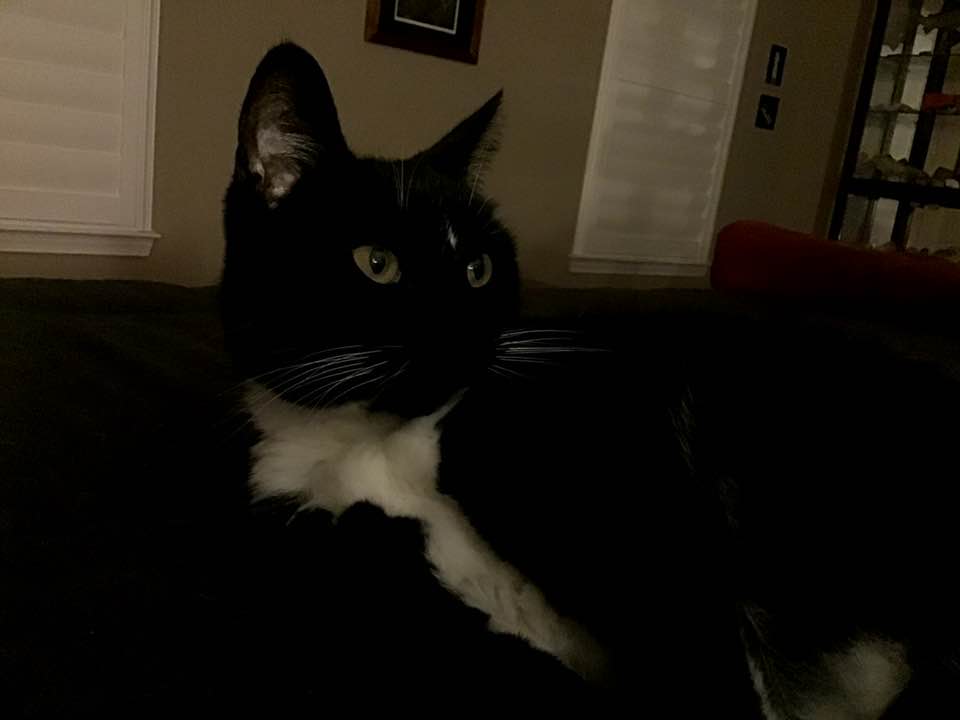
The internet probably clamors with people like me. There must be chat rooms, support groups, therapists who specialize in this disorder, if it can be called that. I wonder how listless I’d have to become to seek such support. My life would have to shrink to the size of an atom. There could be no plants to feed, no backyard birds to watch, no meals to plan, no partner to laugh with, no cat to cuddle, no coffee on the patio, no luck to ponder.

With all this—more than I ever hoped for—maybe there’s just no room left for tears. 
Now Where Did I Put My Sex Drive

“Hot flashes?” my friend said. “They don’t bother me. They’re mostly gone now anyway. And the other stuff—dry skin, weight gain. What can you do? No one stays pretty forever.” She paused, frowned at the drink in her hand. “But the thing that does bother me? Loss of libido. I gotta say, I have a grudge against that one.” She looked at me. “It’s excessive, don’t you think?”

I blinked at her. I knew what she meant. Of all the subtractions that come with menopause, loss of desire has to be the saddest. “Makes you realize what biological beings we really are.”

She nodded. “It does, doesn’t it?” She was a silent a moment. “You know, I don’t think I miss the sex so much as I miss the need for it, the appetite. Why should that get taken away, too?”

“Maybe it’s a kindness,” I offered. “Maybe we lose our desire because we’re no longer desirable.”

“Well, that’s brutal,” she said. “But you’re probably right. Nature thinks of everything.” She looked up into the tree that shaded our table. “Damn men. All they lose is their hair. Bill still wants sex—not as often, but it’s there. It’s retrievable. For women it’s like a door slamming shut.”

No, I thought, not slamming. More like closing, quietly, so quietly you don’t notice. One day it occurs to you that sex has not occurred to you.

You might chide yourself, resolve to put mundane matters aside and focus on love. The problem, you think, is fixable, laughable, temporary. There is the destination, clear as day—all you need to do is show up. Only you can’t. You’ve lost the map. Occasionally you forge ahead, determined to prevail, and occasionally you do, arriving at a finish line barely worth the effort.

I do know of one woman, 84 years old, who claims she is still interested in sex, who would jump in the sack “in a hot minute” if she found an appropriate suitor. When she told me this, I laughed.  “I’m not kidding,” she said flatly.

“Lucky you,” I replied, wondering if having a sex drive in your eighties is a lucky thing. Finding a willing and able partner would certainly be lucky.

This woman is exceptional—most of my female peers have shed their amatory lives and moved on. Yoked to the plow of destiny, we have found other ways to entertain ourselves: birding, gardening, charity work.

“The Change,” people used to call it, ominously. It was an event discussed in whispers, a bane that befell our mothers and aunts. I wasn’t sure what it meant, only that I didn’t want it to happen to me. Odd that the transformation still came as a surprise.

Focusing on the compensations can be helpful, like my newly-sprung ability to notice the ways I’ve been blessed or spared. I can tell you that most everything I see now has significance, that I ache for this beleaguered planet every day, that I can no longer regard a caterpillar on my cabbage without considering its right to be there. Each day I can feel the thrilling edge of something I have yet to learn.

Still, I mourn my libido. The loss of it, after all, is a sort of death, an ash-filled urn in the top of my closet, alongside those size 6 jeans I will never wear again. I am, as nature would have it, changed. What is there to do but shove on my sunhat and go out to the garden, tend to other lives as assailable as my own.

To My Aging Cat

Her eyes are clouding with age,
and when she peers at my face,
I see confusion in hers:
How do I appear to her now?

All I can do is lean forward
and kiss that small patch of white
just above and between her eyes,
the star she was given by a god
who foretold this moment.
She bows her head slightly,
allowing my reverence,
knowing her worth
all at once.

Inner Critics

641-06731914

It was the 70s.
No one had cell phones,
and cameras were for
travel, holidays,
bigger things.
“Selfie” wasn’t even a word.

So when you came across
that ancient photo
tucked in a book,
your stomach jumped.

There you were,
sitting on your dorm bed
hunched over a small typewriter,
looking up, surprised.
Younger, prettier—
that’s to be expected.
It’s the details that fascinate.
The blue eye shadow—too blue,
and eyeliner—too much.
You’re wearing jeans and one of those silly
peasant blouses—all the rage for half a minute.
Long straight hair parted down the middle,
same as the rest of the herd.
A poster on the wall of naked lovers,
red satin sheets. Good god.
A really ugly desk lamp.

STOP!
You can do that now,
tell your censor
to shut up,
leave this innocent alone.

She dogged you then too,
that old nag;
nothing you did
pleased her.
She was with you
from the start,
braiding you with doubt,
cloaking you with dread.
Not anymore.

Age has carried off
what you no longer need,
left you something
to fight with instead.

Now you have your critic
pinned against the ropes.
Let her rail all she wants,
you don’t need to listen,
you slow walking,
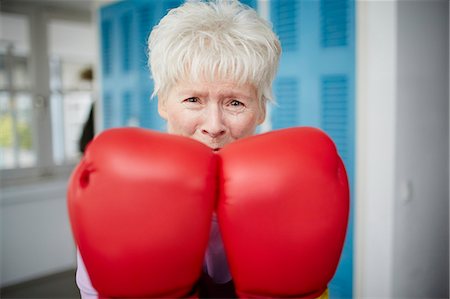
white-haired champion.

Our Younger Versions

Recently I watched a video, a movie my brother-in-law made of a family reunion three decades ago: my sisters and I, along with our partners. The video lasted about an hour. I did not take my eyes off it.

I had never seen myself from such a distance. There I was, along with my beautiful sisters, young again. Our hair! Our skin! Along with the physical disparity between my former and present self, I was struck by the tension in my movements and expressions: the diffidence of youth at odds with its daring.

Women at thirty are powerful. We have not yet reached the zenith of our bloom and we are aware of this. The mayhem of our teens and twenties is over, and even if we have not fallen in love for keeps, or made much money, there is time enough ahead. The best is yet to come, we are sure of it. Old age is out there, inevitable but not pertinent.

Ironically, this faith in the future makes us vulnerable to the present, unable to claim it. The feeling that we are unworthy, unready, seeps in like smoke. We spend our days trying to hide our fears, from ourselves and everyone else. We can’t be blamed for these doubts, or for squandering those precious years with bad bets and detours. Youth has its price.

Examining the girl I was in that video made me more compassionate than nostalgic, and I felt kindhearted toward my sisters as well. I’ve been practicing tough love on myself a long time now, forgiving my body’s cave-ins at the rate they appear. As our spiritual leaders tell us, pain is resistance. The bloom is off the rose, time to tend other parts of the garden.

When the video ended I felt altered, agitated, a confusion that lasted all evening. I was not the woman, I was not the girl; I was caught somewhere between the two and uncertain how to proceed.

I’ve always thought of memory as a portal. Nudged by a thought, a scent, an image, we can reenter the past, if only for a second. This fusion is unmistakable, delightful, reminding us that time is only a construct, a handy device for organizing our lives. The truth of our existence lies in these fleeting junctures, when we are back at a place we never actually left.

Joan Didion wrote:  “I think we are well-advised to keep on nodding terms with the people we used to be, whether we find them attractive company or not. Otherwise they turn up unannounced and surprise us, come hammering on the mind’s door at 4 a.m. of a bad night and demand to know who deserted them, who betrayed them, who is going to make amends. We forget all too soon the things we thought we could never forget. We forget the loves and the betrayals alike, forget what we whispered and what we screamed, forget who we were.”

It wasn’t until the next day that I understood what had happened to me, why I felt so lost after seeing my younger self. I had not stayed on nodding terms with that girl, had all but abandoned her, figuring we had nothing left in common, nothing of any use. What a surprise to see her again, not behind me but beside me.

As if I could have managed without her.

A Postcard from Ted Kooser

I love this poem by Ted Kooser. It is among the many poignant “postcards” in his collection WINTER MORNING WALKS: one hundred postcards to Jim Harrison.

Fate, here I stand, hat in hand,
in my fifty-ninth year,
a man of able body and a merry spirit.
I’ll take whatever work you have.

431ac36f1153582773c5e7c6f8b6ed45


Small Repairs

Once again I have said goodbye to my mother. She lives in New Mexico and each November I travel from California to visit her. Last year she broke her hip, and so I was there twice.

Each time I visit my mother someone accompanies me, a sister or my partner, though once I did go alone and it wasn’t easy driving across the desert wondering what might happen to me if the car broke down. About forty-five minutes from my destination I had to take a comfort break, and reluctantly I pulled into the only rest area on that desolate route. I had not seen another soul for many miles, and you can imagine my unease when another car pulled up right behind me—a man of course. Men can relieve themselves pretty much anywhere, so naturally I was suspicious. I deliberated behind the wheel a moment but my need was too urgent, and as I hurried into the building I imagined him right behind me. My last five minutes on earth, that’s what I was thinking. No one would ever know what had happened to me. I’d wind up in his trunk, or out there somewhere, my lifeless body withering behind a clump of sagebrush. False alarm. I passed him on the way back to my car and he didn’t even look at me.

Getting to Carlsbad is never easy, requiring two plane trips and a long drive. Other than the famous caverns, this hot dusty place has little to recommend it. Still, my mother likes the town, and my sisters and I no longer encourage her to move to a more accessible area; I wouldn’t want to be pestered either. And I understand the comfort she must feel living in a town she knows and trusts. Our senses dim as we age, and this inability to perceive things as clearly as we used to can make the world a threatening place.  Familiarity is invaluable.

Much is accomplished on these yearly visits. One of us takes my mother’s car in for servicing and stocks up on supplies, while another tackles the household chores and yardwork. My mother has limited mobility and can no longer manage tasks that involve strength or dexterity. She should not in fact be living alone, which is something we don’t discuss because we all know the difficulties involved in a transition. For one thing, she is not wealthy; the sort of the retirement home she could afford is the sort we wouldn’t want to see her in. Nor does she wish to live among others. She is a lone wolf and has managed so long on her own that cohabitation would likely finish her off.

So we do with her what we can. We buy easy-reach tools, install grab bars, replace the nonskid stickers in her shower. We change the ink in her printer and order foam mattress pads to ease her aching shoulders. We clean her bathroom floors, hem her pants, bandage whatever wounds she’s acquired. And we try to do these things tactfully, to make light of them. To spare her.

At the end of each day we watch some TV, play card games, share stories (carefully avoiding politics and social issues; a dyed-in-the-wool conservative, my mother can’t fathom our liberal views.) Struggling for common ground, we retrieve mismatched memories and laugh over many of them before falling into silence. Time is running low and we can’t think what to say. If our feelings are hurt by some offhand remark, we don’t let on. Intent on minimizing damage, we skirt any trouble and keep an eye on the clock.

At the front door we say goodbye and this is the moment when my mother seems to shrink. I look back and see a tiny bent-over woman gripping the doorknob, lifting the other hand to wave. She is scared and relieved at once, sad that we are leaving and eager to reclaim her solitude. And so are we. Flying home, we will think of questions we meant to ask, things we should have done. There is more to do here, there is always more to do, but for now she is okay. We will also wonder if we have just seen her for the last time, but this thought is too painful and we push it away. As many times as it returns, we push it away.

My mother can be harsh, no question about that. I am a dutiful daughter, I’ve been told, for making this trip each year. I don’t see it that way. I feel no moral obligation to visit my mother. I go there because she is a frail woman whose life has not been easy and it makes me feel better to help her. She should be living in more sensible housing, with a walk-in tub and nonslip floors and no stairs, but she is not. She is where she wants to be. What is there to do but pick up our tools and make the best of it? Ongoing, seemingly futile, what matters more than these small repairs?

Timely Gifts

A friend of mine is turning sixty, and she is not having an easy time of it. I want to give her a birthday card that will lift her spirits, remind her of the blessings that come with age. Looks like I’ll have to create one myself.

If I were searching for something crass and mocking, I’d have no trouble at all. There is a plethora of cards that poke fun at getting older, most of them illustrated with repulsive photos or cartoons. Somehow it’s easier for us to laugh at old age than to say anything nice about it. I do have a sense of humor, and there is no denying that laughter is good medicine. I just wonder why the difficult and tender process of growing older has become a joke.

“I hope I become a sweet old lady,” I once told a friend, “and not a cranky one.” He looked at me and shrugged. “You’ll just become more of what you are.” I’ve thought often about that remark and I believe he is right. How we grow is up to us. We bestow on ourselves our own largess or meanness, and we are all, every moment, setting an example.

There are elderly people who routinely disparage their lot, reminding anyone who will listen that being old is a cruel affliction filled with pain and devoid of pleasure. Is there anyone at any age who wants or needs this message? Isn’t the expression of these thoughts a cruelty in itself? If we can’t serve as inspirations, might we at least offer comfort?

“Dirty Harry” was once a favorite movie of mine. Now it is far too brutal. My friends tell me that they have become similarly sensitive. As our actual skin thins, so does our emotional armor. This keen awareness of the suffering of others strikes me as something of value.

It’s not so easy, in our days of youth and vigor, to experience this sort of empathy. Compassion seems to require a certain number of years. From it flows kindness, another gift of age. With these two qualities, the world around us expands, becomes suffused with a sudden heart-breaking beauty for which we are inexpressibly grateful. Compassion. Kindness. Gratitude. For some people, these hard-won talents are all the compensation they need.

A woman in her eighties gave me the best lesson in aging I ever received. Every time I see her she is wearing a gentle smile. I praised her for it one day, and she touched my arm and said, with perfect seriousness, “Oh honey, you have to smile—it makes you feel better.”