Blood Thirst

12154389444_a123c5337a_b

Who can forget Sean Connery as 007? Smiling, square-jawed, never had a scratch on him. James Bond was spring fresh in every scene, ready for a cold martini and a hot babe. And Robert Vaughn, The Man From U.N.C.L.E. Wasn’t he a smooth operator? Calculated, restrained, just the right amount of derring-do. And how about Robert Conrad, that gorgeous gunslinger from The Wild Wild West, effortlessly slipping in and out of trouble and relishing every minute of it. And Mission Impossible, the original, with solemn Peter Graves and shrewd Barbara Bain. I loved that self-destructing tape, the quiet gravity with which the missions were accepted and the grace with which they were accomplished.

images (1)images

One of the features that distinguished these TV shows was how neatly the heroes sidestepped bodily harm. 007 was on the brink of annihilation in every movie but used his wits, and often some thrilling gadget, to elude his torturous predicaments. Robert Conrad availed his gymnastic prowess, along with the futuristic features of his luxury train. The men from U.N.C.L.E employed smarts, hi-tech communication devices and a versatile firearm known simply as “The Gun.” The Mission Impossible agents were endowed with a protective canniness and a spectacular range of disguises. There was violence in these shows, to be sure, but kills were bullet-clean, and the camera did not linger over them. Gore was not the point.

images (4)download

Fast forward to the Mission Impossible movies starring Tom Cruise in which Ethan Hunt plunges repeatedly into brutal protracted slugfests. The first 30 seconds of these battles would put any mortal in ICU, or worse, but Ethan keeps coming back for more, enduring multiple lacerations and contusions before emerging in the next scene with just a few tidy scars to remind us of his durability.

downloaddownload (1)

Another thing we didn’t see much of in those early TV series were explosions. Now they’re everywhere, one colossal deafening fireball after another, coupled with billowing black smoke and flying chunks of mortar and steel. The challenge, I’ve heard, is to see how enormous these explosions can appear on screen while maintaining relative safety on the set.

images (2)download (1)

And then there’s hyper-speed, the most overused special effect of our time. From knife fights to space ship battles, overdrive is the numbing norm. That these scenes are too fast to follow and too numerous to sustain interest doesn’t seem to matter.

maxresdefault (1)

What is next? What is the follow-up to bloody beatings, fireballs and warp speed? What is left on that big screen to bowl us over? Not those flimsy “reality shows” with hoarders and naked survivors and duck hunters. And not the next tier, where people dare each other to eat pig eyes or throw themselves onto giant obstacle courses or brawl inside cages. Those games will no longer suffice.

images (3)download

We will have to have the real thing. Real contestants fighting in real time with real consequences, the same entertainment Roman emperors used to placate the swollen, restless masses before the inevitable fall of the empire. We will sit not in amphitheaters but in our living rooms and sports bars. We will cheer for our brawny idols and watch them attack each other with increasingly frightening weapons, and how far we let these contests go will determine the speed of our own demise.

After a while, even this entertainment will not satisfy us, and we will turn to each other in bewilderment and despair and bottomless need, and slowly we will find our way back. Or not.

5301c7a4776f7229a4fa0300

Photo by ЯAFIK ♋ BERLIN on Foter.com / CC BY-NC-SA
Cellular Memory

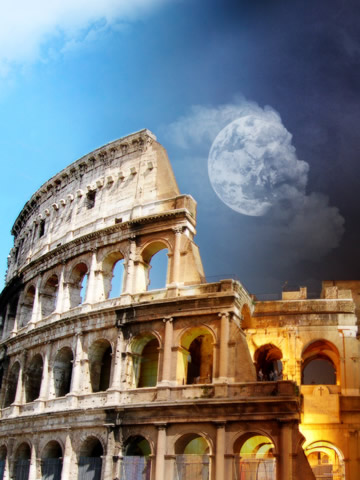
You can stop me in my tracks with a program or story about ancient Rome. My stomach flutters when I look at photos of the Coliseum, the Pantheon, the Forum, and imagine the people who filled them, 2000 years ago. Gazing at lustrous marble statues of curly-haired emperors,  elaborate friezes of grappling soldiers, I feel almost holy, as if I’m approaching important truths, closing in on a memory.

The cells in our bodies have age-old intelligence. Consider migration, the way in which a creature knows, from birth, precisely where to head. This innate intelligence works in the background, constantly informing us, keeping us alive. If a pathogen from the past resurfaces, our bodies know how to handle it. We are now learning that this cellular memory is also evident in organ transplant patients, particularly heart recipients, who will sometimes assume the habits, behaviors and preferences of their donors. Every breath we take and every bite we swallow is composed of atoms that have been here since the earth began. Perhaps we are stirred by the places and cultures we were once a part of. If you love the violin, your forebear might have played the lute.

So, along with my blue eyes and cautious ways, there’s a reasonable chance I was born with this tenderness toward ancient Rome. I once wrote a story about Pompeii and became lost in the research; for weeks I could think of little else, and even my dreams were filled with fire and pumice.

I have spent some time thinking about the Coliseum and what went on inside those massive walls. Commissioned by Emperor Vespesian in 72 AD, the project was completed eight years later. With a population of nearly one million, Rome was becoming unmanageable and agitation was on the rise. Vespesian hoped to quell the anger and gain popularity by staging deadly combats between gladiators, as well as animals fights—over nine thousand animals were killed in the inaugural games. If a gladiatorial struggle did not end in death, the presiding emperor would decide the fate of the fallen: thumb’s up or thumb’s down. Sitting in rows according to their social status, 55,000 Romans cursed and cheered as they watched the slaughter below. When the crowd grew more restive, the games grew more bizarre, but as the empire neared its end, nothing could appease the frenzied masses.

While there are many reasons for the fall of the Roman empire, the problems began with the politics. The Senate, designed to govern fairly and wisely, became riddled with corruption. Consuls and officials offered positions to those who could pay for them. Bribes were accepted in exchange for favors. Unscrupulous emperors took control, while merciless minions carried out their atrocities. At last, there was nothing for the masses to do but form coalitions against their own government and eventually overpower it.

Aside from a vile few, people today would not tolerate the butchery that went on in the Coliseum, but we do have our own ignoble forms of entertainment on the small screen. Buckwild. Here Comes Honey Boo Boo. Amish Mafia. Bridalplasty. If we can’t watch people kill themselves, we can at least see them at their lowest. Some say that reality shows, having gotten so bad, are on the wane. If so, we are one step closer to freedom.

Before the Roman coalitions became a real threat to the government, before they began to take back their own lost power, there must have been ancient Occupy movements, small groups of loosely organized plebeians desperate to be heard.

We know that history repeats itself. To see that nothing is too big to fail, all we need to do is look back. The change that must happen is already upon us. In my cells I can feel it coming.

Roman-Empire