Of Magic And Memory

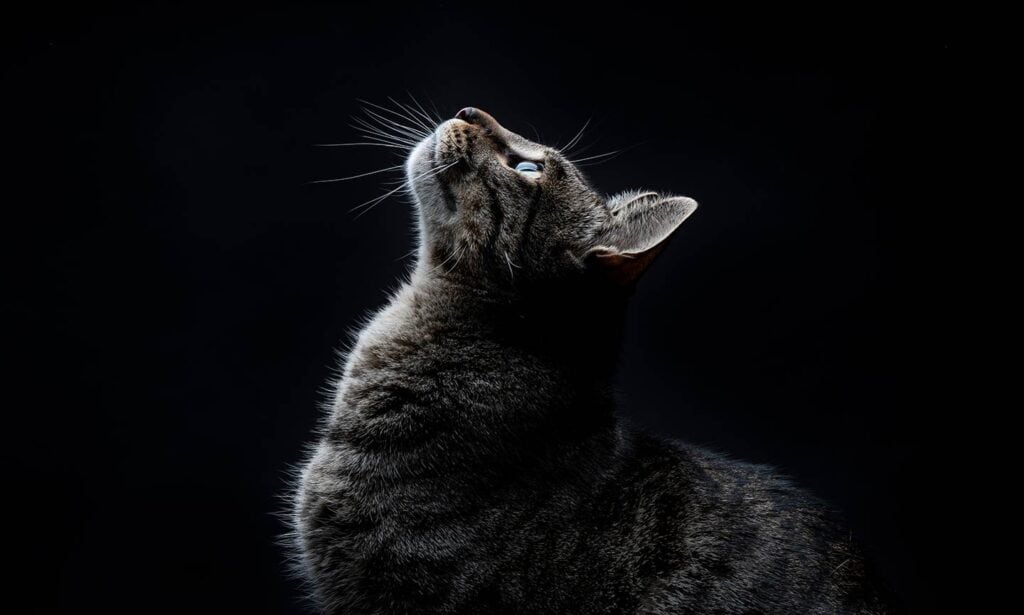
In the evening, my cat will occasionally turn her gaze upward and stare at something invisible to me. She will follow this entity with her eyes as it moves, apparently, along the wall just below the ceiling. She does not seem disturbed by what she perceives, just keenly interested. After a moment or two, she will blink and look away, settle back into my lap. Whether the object of her attention disappears or she simply grows bored with it, is anyone’s guess. “It’s their eyes,” a friend says. “They absorb light and then reflect it—like headlights on a road sign. Cats see a whole world we don’t.” I have no idea what my cat sees; I only know that sometimes, in my living room at night, we are not alone.

Recently I met a childhood grief counsellor. She works with preschoolers, children brought to her by over-cautious parents who do not understand that some boys and girls really do see ghosts, only they call them Grammy or Grandpa or Uncle Fred, whatever the case may be, and while the parents are alarmed by these sightings, the children are not. Too young to fear anything but falling or loud noises, they are typically comforted by their visions. Grammy has come to visit, this is all they know. Science has not yet entered their lives. Their world is made of magic, and magic allows for everything. As they get older and start to reason, they lose this perceptual power. By the age of seven it’s all but gone, along with those “imaginary friends” children often describe.

They remember past lives too, the counsellor went on, though only a few are highly verbal and can articulate these memories. One little boy, at two years old, recalled dying in a plane crash. He described the fiery plane and how he couldn’t get out of it, offering so many specifics that researchers were able to “solve” his case by tracing the details back to a pilot who did indeed crash in the ocean during the Battle of Iwo Jima.

What she has learned from children, the counsellor told me, makes her think twice about certain conditions–savant syndrome, child prodigies, even those phantoms the dying speak of. Science is a wonderful thing, she said, and sometimes it’s no help at all.

Looking For A Good Time

Last week I enjoyed a video a friend sent me of gorillas romping in heaps of fallen leaves. Riding the exercise bike a few minutes later, I turned on the television and landed on an enchanting nature show featuring animals at play—lion cubs, penguins, puppies, dolphins. After that, on my way up the stairs, I was ambushed by my spring-crazed cat. He had been hiding behind a door, waiting for me. I took these events as a sign, a reminder that I had a whole day ahead of me in which to have fun, or not.

At the plant nursery where I work there is an arching wooden bridge. In the winter it spans a river of rainwater; in the summer it turns whimsical, serving no function other than to delight the children who are compelled to run over it, again and again. Another attraction are the fountains. Children are charmed by water and will head for it like baby sea turtles. Their joyful shrieks carry across the nursery as they thrust their hands into the basins and splash the water this way and that. Color enchants them, too. They always make a beeline for the water wands, which come in an assortment of delicious colors. Product designers understand that color is fun, and even adults can’t resist that rainbow display. We sell a lot of water wands.

Children are masters of play. I’ve often wondered why this is so, why we lose the capacity for fun as we get older. We have our grown-up games of course—Scrabble and poker, Wii and Xbox, tennis and bowling. But these are games with an end point, a goal. Even individual sports like hang-gliding or cliff jumping require planning and risk assessment, a competition with oneself.

Children don’t pause to consider themselves; they just plunge into whatever catches their attention. They do not know that being alive means being in peril. They have no idea that their chances are slimming, that summers are not long, that one day they won’t be here. When they start skipping, when they make stone soup, when they build forts out of chairs and blankets, they are living in the only realm they will ever own. Running without reins, they are free because they don’t know it.

While we may no longer feel the urge to build forts or splash in fountains, we adults still lose ourselves now and then. Alone in our homes, we might break out in dance, or grab a spatula and start singing into it. In quieter moments, we can disappear into our passions: fossil collecting, product design, painting. As a writer, I lose myself not only in composition, but in research as well. There are many way to escape the tyranny of time, if only for a few hours.

It is said that a person who is living well makes no distinction between her work and her play, and this is certainly true for those lucky enough to love their jobs. Most of us can’t make that claim. We labor to pay the bills, and then we labor at home, and what free time we have is spent driving from one store or business to another. After a few months of this, we reward ourselves with a vacation that never feels adequate because we have leveraged too much on it.

I’m wondering if we can trick our stodgy selves by wringing more joy out of our daily lives, if, like children, we could make our own fun? We could start small, maybe with accessories, adding a scarf, a lapel pin. We could pour our coffee into china instead of a mug. Taking a cue from Martha Stewart, we could decorate the dining room table with fall leaves and fruit. We could smile at everyone we encounter and see what they do. We could make it a game.

There’s a woman in town who drives an old Cadillac on which she has glued hundreds of tiny toys. There is a couple down the street who have turned their front yard into a fairyland of handmade stone castles. The woman next door takes photos of neighborhood dogs, then turns them into Christmas ornaments she gives to the owners.

How hard could it be to have a little more fun each day? A child can do it.

A Streaked Window

114618227_a4794b5b09_o
A child needs a father like a fish needs a bicycle. That’s the conclusion I came to somewhere in my teens. Now, decades later, the notion persists despite the heartening anecdotes I’ve heard. It’s not that I don’t believe the people who tell me their fathers are or were gems; I just can’t envision that Father Knows Best kind of world. Were these men Fred McMurray nice? Did they sit cross-legged on sofas, pipe in hand and gently listen to their children’s gleeful chatter? Did they grin and tousle their hair like Brian Keith in Family Affair? Did they teach hard lessons in a tender fashion, a la Andy Griffith of Mayberry? Or did their good qualities simply edge out the bad? Society holds the bar lower for men than women as if, expecting the worse, all we ask of fathers is decency.

My father, as you may have gathered, was not a nice man. He was a sadist and a tyrant and worse. There are too many similar stories, too many women abused by a father, uncle or grandfather. I know that these men do not represent their gender and that good men are plentiful, but my view remains smudged, a streaked window I cannot wipe clean. Each time I see a father with a young daughter I look for signs of trouble. I want to save whomever I can, now that I have the power.

Two friends of mine, women happily married to each other, are raising a boy and a girl. I have observed their family dynamic for many years, and what strikes me most about these women is their keen awareness of the colossal responsibility they have taken on. These two have made a solemn commitment to motherhood, parsing every detail and possible consequence of their parental decisions in a continual quest to keep their offspring out of harm’s way and reasonably content. The same can be said of another couple I know, married men, who are also raising children. Perhaps this level of dedication comes from hard-won victories: the right to marry, the right to adopt. Perhaps it is borne of suffering, whatever ridicule or injustice these men and women endured growing up in a culture that did not include them. Pain depletes some people, breaks open the hearts of others.

There are communal families, as in the Scandinavian countries, and there are transgendered couples raising children; there are those who, through divorce or tragedy, are compelled to parent without partners, and there are those who deliberately choose that arrangement. Love being fluid and accommodating, families can be cobbled from whatever is there.

I admire these devout parents. I never wanted children—the idea makes me woozy. Motherhood requires resources I must have been born without.

I live in the suburbs, where traditional nuclear families still predominate. The notion that such environments produce the healthiest children is religious propaganda with no supporting evidence. Sometimes I stand at the window and watch the kids across the street playing with their dog while their father washes the car. I have no idea what goes on behind their front door, but the children appear well-adjusted, and I have no reason to believe they’re in danger.

I want this to be true. I want them to grow up as they should, so that the sight of children at play will bring them nothing but joy.


Photo by Creativity+ Timothy K Hamilton on Foter.comCC BY-NC-ND