With deepest thanks to Robert Eugene Perry, founder of Metaphysical Fox Press, I am announcing the publication of my new poetry chapbook. “In This Vanishing Time” is a collection of 30 poems that explore the human condition and the ways we are shaped by the quiet mysteries that make up our days. Available as a hard copy and an ebook soon, you can find this publication on Amazon.
Please visit the Metaphyical Fox Press on Facebook. Bob Perry is a dream to work with, friendly and professional at once, with a love of literature and an impressive knowledge of the publishing world.
My deep thanks go to editor Debra Ellis Phelps for accepting my poem “Deliverance” for the new Formidable Woman Solace Anthology. In this beautiful collection are 38 pieces that explore nature, the bonds between us and the need to come together, now perhaps more than ever. Additional thanks go to associate editors Sandi Stromberg and Sventlana Litvinchuk, who read, reviewed, commented, and helped choose the work represented here.
I am beyond thrilled to announce the publication of my poetry collection A Day Like This. A printed edition of A Day Like This is now available through the Kelsay Bookstore or Amazon. For those who prefer an expedited (and more budget-friendly) version, the ebook will be ready in just a few days and I will make another announcement then. Ratings and comments, however brief, are deeply appreciated. https://tinyurl.com/27w32z27
“In the title poem of Jean Ryan’s luminous new collection, her speaker sees swallows slicing the air, observing, ‘Short dark arrows, they never miss, their flight too swift for error.’ I can’t think of a more apt description for A Day Like This, in which poem after poem so vivdly penetrates to the core of lived experience. Ryan’s poems have an ease of movement and transparency of structure I find most enviable. She has a special gift for finding what remains fresh and particular inside the ancient stuff of poetry. This is a gorgeous book, powerful and assured, written by a poet who is elegant, concise, honest, and warmhearted in her approach. I can’t recommend it enough. A quietly masterful work.” Erin Belieu, author of Slant Six, Black Box, Come-Hither Honeycomb, and One Above and One Below.
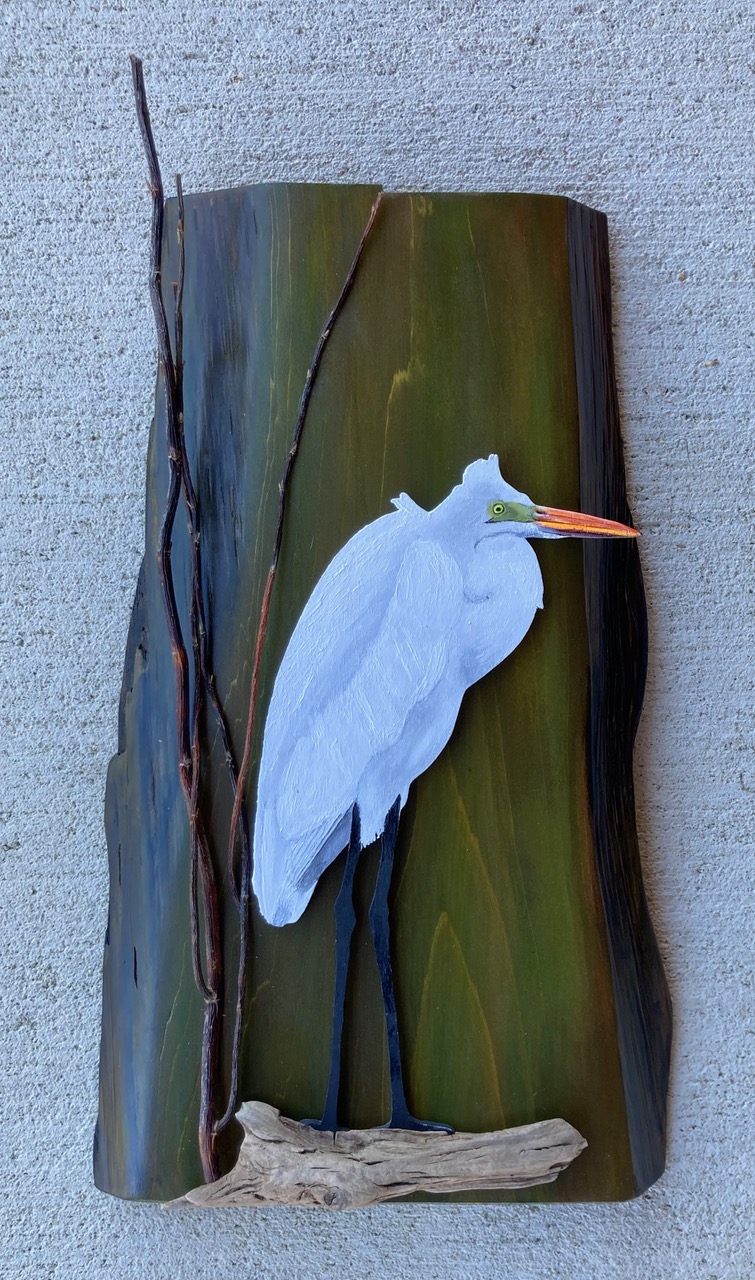
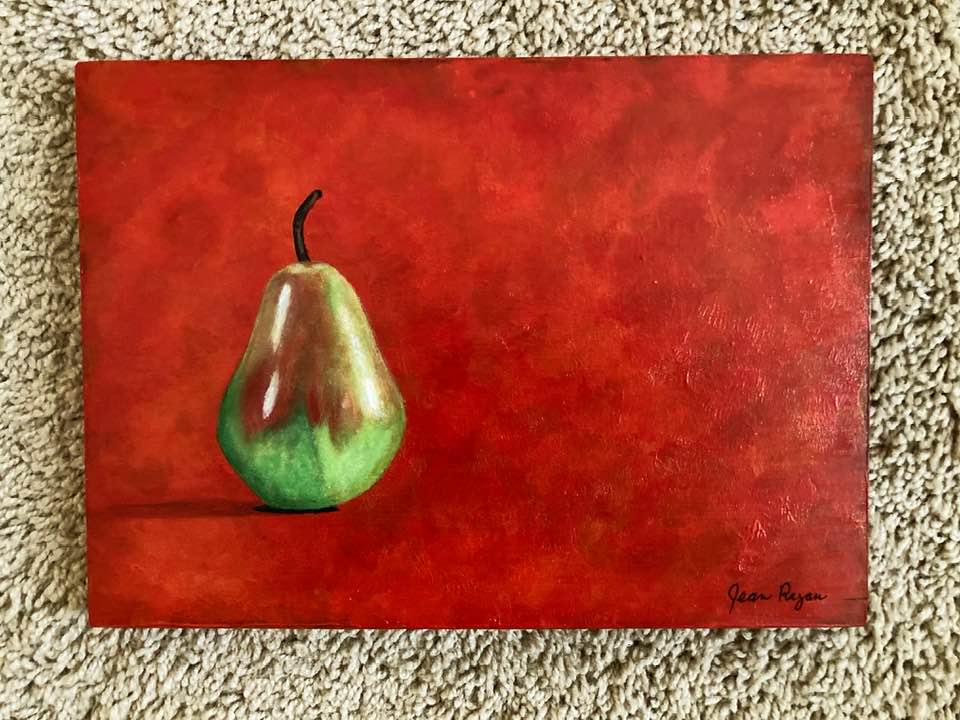
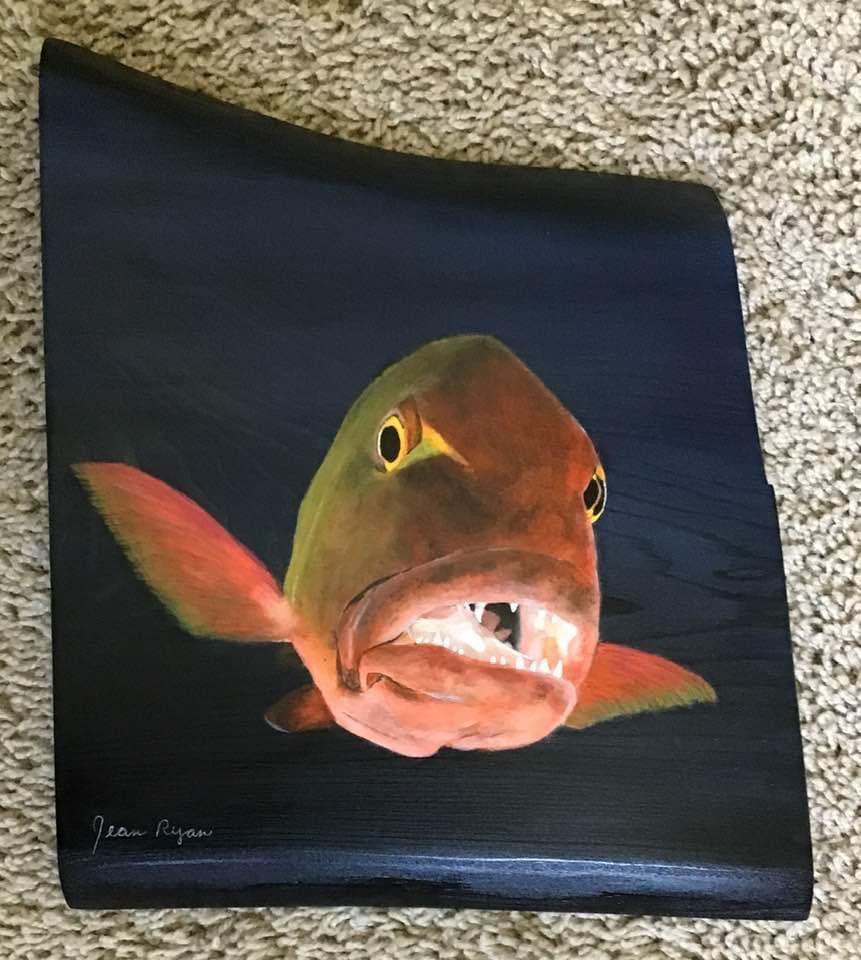
Thought it was time I posted more of my acrylic paintings. I still do many pet portrait commissions and look forward to the surprise and happiness they bring.
I give my deep thanks to the editors of Woodlands nature~magic~mystery~myth for including my poem “Lichen” and my essay “Lyme Ticks and Ladybugs” in this wondrous new anthology. A perfect tonic for the busy holiday season, Woodlands is now available on Amazon. Stoke the fire, curl up your sofa, and enjoy this treasury of nature writing.
How we view time can be a source of comfort or pain. Many people, particularly eastern cultures, adhere to the belief that we live any number of lives: time is seen as cyclical and forgiving. Westerners tend to see time as linear, something we use up, something we never have enough of.
Whatever our beliefs, we all know that the lives we are living now will one day end. This knowledge is the ultimate spoiler, the price we pay for having a neocortex. Other animals are not saddled with this awareness—at least I assume, I hope, they are not.
In 1777 the British explorer Captain Cook gave a newly hatched tortoise to a royal family in Polynesia, who kept the creature as a pet until it died of natural causes 188 years later. That turtle pulled its heavy self across the ground, presumably the same well-worn ground, for 68,620 days. Was it weary by then? Bored? Might it have opted for a life half as long?
On the other end of the spectrum is the mayfly, a creature whose adult life amounts to less than a day; in some species, just a few minutes. The larval versions, naiads, can live up to a year, during which they hide in aquatic debris and progress through several stages—instars—before growing a pair of wings and becoming immature adults. The winged juveniles last no longer than the final version and are not sexually viable until a few hours later, when they emerge from their last molt with features unique in the insect world, paired genitals: two penises for the males and two gonopores for the females. They do not feed: their mouths are useless and their digestive tracks are filled with air. This day, their first and last on earth, all they do is mate—little wonder our creator doubled up on their genitalia.
Like locusts, mayflies “hatch” in stupendous numbers, trillions at a time. The males begin swarming over a river and the females fly into this mass. With specialized legs, the male grab a female and copulation takes place in mid-air, after which the female falls to the water’s surface and lays her eggs before dying. The spent females cover the water, providing a feast for the fish below. The males fly off to die on land, a boon to local birds.
Even the waiting wildlife cannot keep pace with these mayfly windfalls, and in some municipalities snow plows are deployed to clear away the mountains of corpses. While Americans consider mayflies a nuisance, tribes in Africa make nutritious patties out of them.
It would seem that a mayfly’s fleeting life amounts to nothing more than sustenance for larger creatures. Mayflies, all 2500 species of them, are designed as sacrifices, put here for the greater good. Twenty-four hours is all the time they are given and all the time they need.
The ancient Greeks had a saying:
“There is not a short life or a long life. There is only the life that you have, and the life you have is the life you are given, the life you work with. It has its own shape, describes its own arc, and is perfect.”
For nine to ten months each year the male bowerbirds of New Guinea work on their bowers. The style of the bower depends on the species. “Maypole” builders place hundreds of sticks around a sapling, winding up with a great mushroom-shaped structure. Other birds create “avenue” bowers, vertical rows of twigs imbedded in the earth between a narrow passageway. After construction, some of the more fastidious males will use their sharp beaks to paint the inside walls with plant juices. Finally, the birds begin to decorate, using whatever strikes their fancy: hunks of moss, red berries, silver snail shells, golden leaves, flowers, feathers, stones. Their whimsy extends even to manmade items: discarded batteries, toothbrushes, coins, nails, rifle shells, pieces of glass, strips of cellophane. Color is important. Some bowerbirds favor blue tones, while others prefer white or orange. Work is never quite finished; the birds spend weeks rearranging their treasures and adding to the plunder―stealing from one another is a common practice.
And the purpose of these sylvan palaces? It’s the same old story: seduction. Year after year these indefatigable birds give everything they’ve got for the chance to spend a few glorious seconds on the back of a female. Rich in suitors, the female bowerbird flies from one endeavor to another, assessing and rejecting, till she finally lands on the threshold of the bower she likes best. Sometimes she obliges the waiting male right away; other times she requires coaxing and the frenzied male will offer her gifts, a blue paperclip, an orange leaf. If these fail him, he will strut back and forth, extending his wings and chattering loudly so that she can see what a superb specimen he is. Many females end up selecting the same male and returning to him the next year, paring the chances for the other males whose efforts are nonetheless worthy.
So what becomes of all the bowers that don’t make the cut? Do they fall into disrepair, victims of time and weather? Or do the builders themselves do the dismantling, starting from scratch each fall, their bird brains brimming with fresh ideas?
I have no trouble believing that the initial impulse to build a bower is a reproductive imperative. At some point, though―perhaps after the forty-eighth golden leaf, the first dozen blue parrot feathers—I think this primal urge is forgotten and what drives the male after that is his own enthusiasm, craft turned to ecstasy. For what difference would it make to the no-nonsense, time-constrained female that there are thirteen parrot feathers instead of twelve, or that the interior, which she may not even bother to inspect, is freshly painted?
Only to the builder does every leaf and feather matter; each year, from fall through spring, nothing matters more. That his work may be in vain is something he is not prepared to ponder.
People, on the other hand, expect reward. The formulas we are taught—hard work equals success, healthy living ensures longevity, good deeds bring good luck―these ideas die hard and not without bitterness. Our house is blown away; the tumor is malignant; the dog we adopted gets hit by a car. “It’s not fair,” we cry; moreover it doesn’t make sense. Why would God allow such things? Why are we sharing our home with polio and salmonella and brown recluse spiders? Where is the virtue in poisonous toadstools and powdery mildew? Indeed, our madcap inventor seems to have as much interest in the growth of a fungus as he does a fetus.
Whatever your religious views, one thing is certain: a long time ago this ball got rolling and a force we can’t fathom gave it the nudge. From that point on, life never looked back.
Consider the extravagance of species on this planet: 140 kinds of sparrows, and every one of them changing, each generation bringing better beaks, designer tails, new come-hither stripes. So many versions of a small brown bird, all of them vying for a little more time. Why not, say, a dozen species? Wouldn’t that be a sufficient sparrow allotment? Why is the earth burdening itself with this colossal balancing act?
Watching children play or dolphins leap or eagles soar, it’s easy to conclude that life is fun, that we are put here to enjoy ourselves. Take male lions, which spend their days on grassy plains, dozing in the sun, dining on warm fresh prey, thanks to the prowess of their harems. Then take a look at male emperor penguins, which spend long winters on open ice, huddled together for warmth, risking starvation, a single precious egg balanced on their frigid feet. A tortoise trudges along for well over a century; a mayfly gets less than a day. One bird scores a mate with just a couple songs, while another must build a palace. Not one of these creatures knows the difference. “Why” is a question we might all do without.
To be born is to have worth. Lucky or not, lovely or not, everything on this busy blue orb gets a fighting chance to do its best. Rust and roses. Slugs and swans. Lyme ticks and ladybugs.
Does it feel good to be a ladybug? We can’t say. All we can witness is the effort: one tiny being earning its life.
It hurts to be alive, too much and too often for pleasure to be the point; much of the time we manage without it. Now and again we are taken by surprise. In the oddest moments—spreading mulch, washing a plate, buttoning a child’s coat—we are suddenly, inexplicably, happy. For the bowerbird, whose life amounts to little more than labor, the joy is built right in.
In the spring of 2013, the seventeen-year cicadas, called Magicicadas, emerged from their burrows along the eastern seaboard. This was Brood II and involved seven states. In 2012 Brood I emerged in Virginia, West Virginia and Tennessee. Brood VIII appeared right on schedule in west Pennsylvania in 2019.
I love this chart—it’s like a treasure map. How wonderful to know that if I show up in a woods in southern Wisconsin in the spring of 2024, I will witness the emergence of millions of cicadas. I would like to be there, peering at the ground, when the very first one sticks his head up. “Welcome,” I would say. “Welcome to this world.”
When the nymphs emerge, their bodies are soft and cave-white. I imagine they are blind, too, which might explain why they show up after sunset: sunlight must be shocking after seventeen years underground. The first thing they do is find a bit of vegetation to rest on while they complete a final molt that takes them into adulthood. In a week’s time, their exoskeletons have hardened and darkened, and they have grown transparent wings with orange veins. Their eyes, now quite large, are bright red. Like stubborn ghosts, the skins of their youth remain in the places they were.
The males, seeking mates, begin contracting their abdomens to make a series of loud buzzing and clicking noises. Often they form choruses high in the sunlit branches of trees, and their considerable racket attracts females of the same species. While the females don’t sing, they answer the males with a noise of their own, a movement called a wing flick, which can vary from a rustle to a sharp pop. Eventually they all find each other and a mass mating occurs overhead, after which the females cut slits in twigs and lay their several hundred eggs. Six weeks later the eggs hatch, releasing nymphs the size of ants that fall to the ground and immediately burrow in. For nearly two decades these pale bugs tunnel through a black world, sucking tree root sap as needed and growing ever so slowly. No one knows why they stay hidden for so long, or what finally beckons them skyward all at once.
Cicadas don’t live long as adults, not even long enough to see their progeny. In a month’s time, they sing, mate, lay eggs and die, leaving an immense litter of dry husks. So many of them come into the world that even after the birds and rodents are satiated, the population remains intact.
I suppose those four weeks of glory is the point of a cicada’s life, but I wonder about the young, who live seventeen years in silence, impervious to cold and wind and noise. I see them tunneling away, no clue there’s another world waiting, no need to know anything but the next quarter inch. It seems a kindness, all that time to be young.
“Hot flashes?” my friend said. “They don’t bother me. They’re mostly gone now anyway. And the other stuff—dry skin, weight gain. What can you do? No one stays pretty forever.” She paused, frowned at the drink in her hand. “But the thing that does bother me? Loss of libido. I gotta say, I have a grudge against that one.” She looked at me. “It’s excessive, don’t you think?”
I blinked at her. I knew what she meant. Of all the subtractions that come with menopause, loss of desire has to be the saddest. “Makes you realize what biological beings we really are.”
She nodded. “It does, doesn’t it?” She was a silent a moment. “You know, I don’t think I miss the sex so much as I miss the need for it, the appetite. Why should that get taken away, too?”
“Maybe it’s a kindness,” I offered. “Maybe we lose our desire because we’re no longer desirable.”
“Well, that’s brutal,” she said. “But you’re probably right. Nature thinks of everything.” She looked up into the tree that shaded our table. “Damn men. All they lose is their hair. Bill still wants sex—not as often, but it’s there. It’s retrievable. For women it’s like a door slamming shut.”
No, I thought, not slamming. More like closing, quietly, so quietly you don’t notice. One day it occurs to you that sex has not occurred to you.
You might chide yourself, resolve to put mundane matters aside and focus on love. The problem, you think, is fixable, laughable, temporary. There is the destination, clear as day—all you need to do is show up. Only you can’t. You’ve lost the map. Occasionally you forge ahead, determined to prevail, and occasionally you do, arriving at a finish line barely worth the effort.
I do know of one woman, 84 years old, who claims she is still interested in sex, who would jump in the sack “in a hot minute” if she found an appropriate suitor. When she told me this, I laughed. “I’m not kidding,” she said flatly.
“Lucky you,” I replied, wondering if having a sex drive in your eighties is a lucky thing. Finding a willing and able partner would certainly be lucky.
This woman is exceptional—most of my female peers have shed their amatory lives and moved on. Yoked to the plow of destiny, we have found other ways to entertain ourselves: birding, gardening, charity work.
“The Change,” people used to call it, ominously. It was an event discussed in whispers, a bane that befell our mothers and aunts. I wasn’t sure what it meant, only that I didn’t want it to happen to me. Odd that the transformation still came as a surprise.
Focusing on the compensations can be helpful, like my newly-sprung ability to notice the ways I’ve been blessed or spared. I can tell you that most everything I see now has significance, that I ache for this beleaguered planet every day, that I can no longer regard a caterpillar on my cabbage without considering its right to be there. Each day I can feel the thrilling edge of something I have yet to learn.
Still, I mourn my libido. The loss of it, after all, is a sort of death, an ash-filled urn in the top of my closet, alongside those size 6 jeans I will never wear again. I am, as nature would have it, changed. What is there to do but shove on my sunhat and go out to the garden, tend to other lives as assailable as my own.
Have you ever wished there were a way to find the best books on a particular subject? Welcome to Ben Fox’s Best Books series, a website for finding and discovering stand-out works on a delightful variety of interests. Many thanks to Mr. Fox for including my book, Survival Skills, in this amazing project, along with five other outstanding works sure to please animals lovers everywhere.











 Jean Ryan