Manatee Video
Having written this story, http://bluelakereview.weebly.com/manatee-gardens.html, I love this short video. https://www.facebook.com/supweeki/videos/874149955997865/?fref=nf

Having written this story, http://bluelakereview.weebly.com/manatee-gardens.html, I love this short video. https://www.facebook.com/supweeki/videos/874149955997865/?fref=nf
Recently I visited my sister Jill in coastal Alabama. I had not seen her well-ordered home in several years, and on that first morning, while everyone else was still sleeping, I padded through the kitchen, living area, office and screen room, studying the furniture and artwork, smiling over my sister’s choices. I was struck by the quiet beauty of her home, how perfectly it reflects her personality.
The same can be said about my other sisters. Joan lives in rural Georgia. Her yard is filled with flowers, fruit trees and vines, and an endless procession of herbs and vegetables, the bounty of which she brings into her house. Her counters, lavish with gifts from the garden, demonstrate her reverence for Mother Earth and the respect she gives all living things regardless of their performance. Jane wound up in a small Texas town. She also grows food in abundance, which she cans or freezes or gives away, but even larger than her garden is her wide-open heart. Her home is a refuge for strays cats, abandoned dogs and people who drop by for her wit and warmth. If it’s acceptance you want, you will find it at Jane’s.
I suppose my own property furnishes clues about me. I live in a tri-level home in the suburbs, a relatively stable environment with a tidy yard. I too have a vegetable garden—well, two raised beds—and shrubs and flowers that please me. Less forgiving than Joan, I cannot abide ruin and will readily replace the underachievers. As for my furnishings, they are on the spare side, a preference echoed in the sort of writing I favor: lean, direct, distilled.
While our habitats may differ, they all require one common element: care. We put effort into the spaces we live in.
Many animals take pains in this regard, and on a far grander scale, though what their homes say about them is anyone’s guess. Why, for instance, would a ten-inch wood rat build a stick nest more than three meters high? Even more perplexing is the décor. Again and again this creature will venture into attics or sheds or car engines, seizing whatever shiny treasures catch its eye. Also called a pack rat or trade rat, it will frequently drop the first item in favor of another. These objects offer no discernible benefit, and who can say why the rat insists on them, or why it needs such a massive home.
Male bowerbirds spend up to ten months a year constructing their elaborate nests. The type of bower depends on the species, but all are impressive, involving hundreds of carefully placed sticks. Following the construction phase, some of the males will use their beaks to paint the inside walls with plant juices. After this, the birds begin to decorate, gathering whatever strikes their fancy: moss, berries, leaves, flowers, feathers, stones. Manmade items are also employed: batteries, coins, nails, rifle shells, pieces of glass, strips of cellophane. Color is important. Some bowerbirds favor blue tones, while others prefer white or orange. Work is never quite finished; the birds spend weeks rearranging their riches and adding more. These sylvan palaces are designed to attract mates, but many never do, and you have to marvel at the undaunted losers whose labor and artistry go unappreciated, year after year.
And then there’s the octopus, one of earth’s most elusive and mysterious creatures. The octopus is a nocturnal animal and spends much of its life tucked inside a den. The den itself is small and not occupied for long, but for reasons no one can fathom the octopus is compelled to adorn its temporary front yard with a bewildering assortment of items, everything from lustrous shells to old boots—basically whatever has fallen to the sea floor. When a diver spots these odd collections, he knows there’s an octopus nearby. Considering how secretive these creatures are, their penchant for embellishment makes no sense.
Depending on your circumstances, you can live your whole life without much effort. Effort, like knowledge, is an option. If you have special skills or talents, no one will force you to use them. You can consider your home little more than a shelter and forgo any enhancements. We all die empty-handed anyway.
Despite evidence to the contrary, I think labor is always rewarded. Effort is a gift we offer ourselves. Every picture we hang, every seed we plant, every shelf we dust, is an expression of love, and the more we attend to, the richer our lives become. You can live without love of course, many people do. That’s the biggest mystery of all.

Photo credit: 0ystercatcher / Source / CC BY-NC-SA
“So it is if the heart has devoted itself to love, there is not a single inch of emptiness. Gladness gleams all the way to the grave.”
— from “Honey Locust” by Mary Oliver
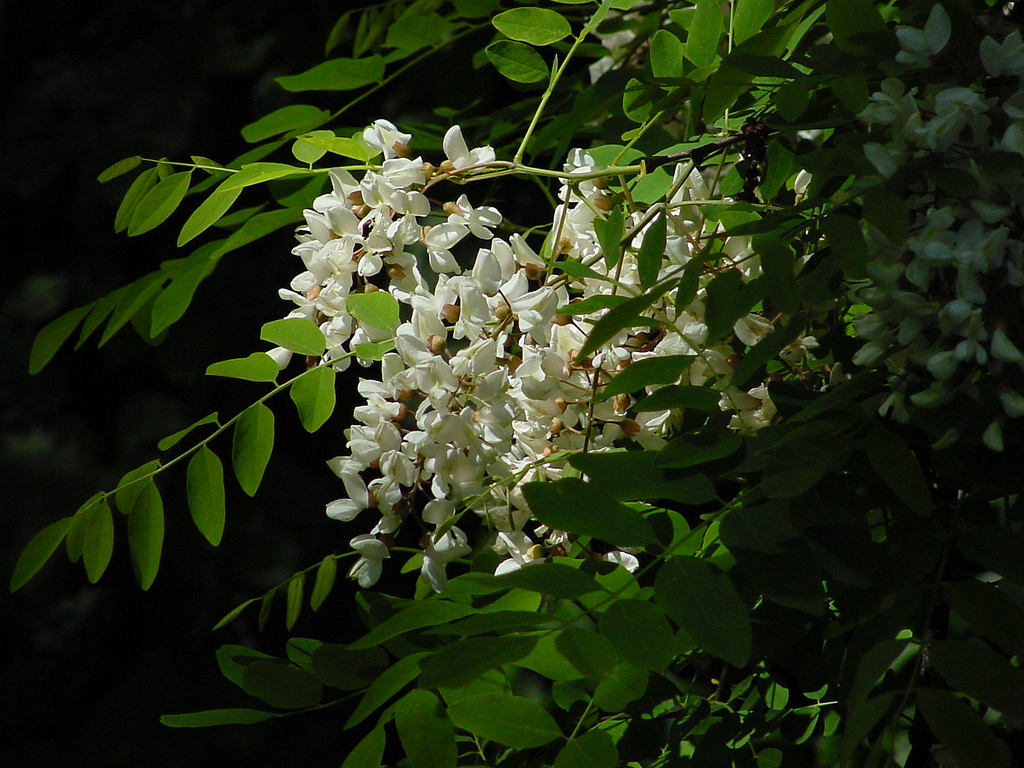
Photo credit: goingslo / Foter / CC BY-NC-ND
My nephew recently visited Hawaii and sent me this glorious photo. It’s the perfect accompaniment to my story “Breach.”

“And then, off to the right, an enormous whale surged out of sea, all the way, the ocean pouring off its body, its great fins and belly white against the blue sky. In the instant that it hung in their world, this magnificent, improbable beast, Amy threw her arms up and whooped, as they all did—they could not help themselves, as if whatever ecstasy that sent this creature out of sea had rushed into them, and when the whale fell back, in a tremendous splash, they felt in their own bodies the sound of its weight.
…It must have felt wonderful, that instant of dominion, that pause between the rising and the falling. There was no other way to account for the effort.”
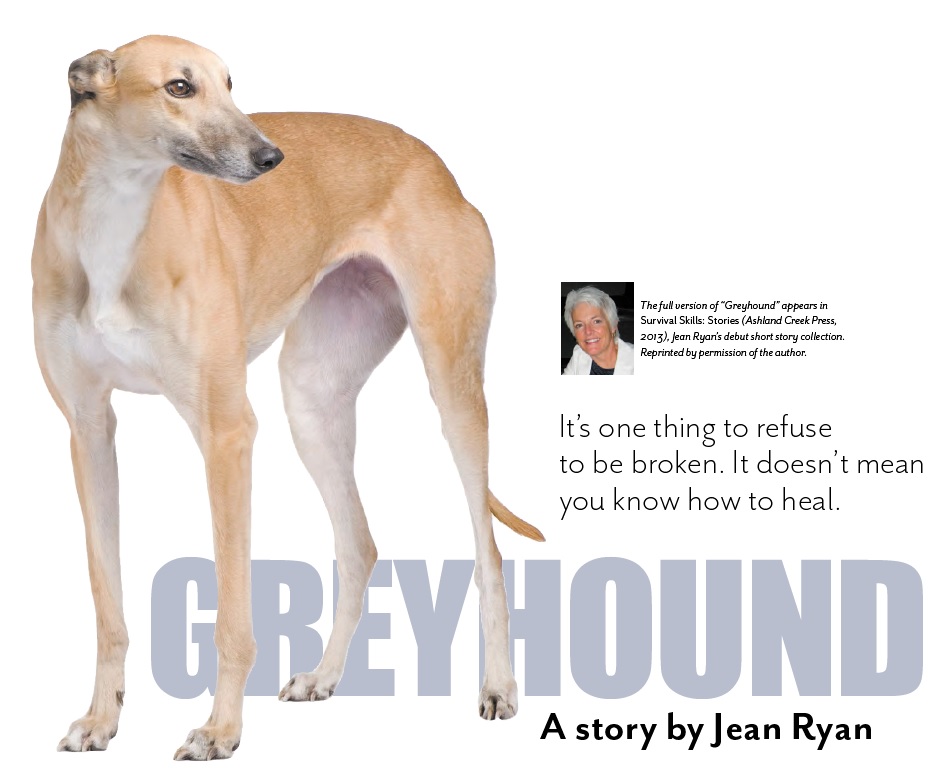
My deep thanks to editor Keiko Ohnuma for publishing this excerpt of my story “Greyhound” in the latest edition of The Bosque Beast, a journal dedicated to bringing awareness to the plight of animals. “Greyhound” is included in the story collection SURVIVAL SKILLS, published by Ashland Creek Press. I am proud to have my work recognized by people who care so deeply about animals and the beautiful, fragile world we live in.
Physicists tell us that thoughts, like everything else in the universe, are a form of energy. The more we dwell on something, the more energy we give it, and this energy spills out of us and into the world.
Yesterday I happened to see a deer and two fawns munching my agapanthus buds. I kept very still behind the window, and they did not know they were being watched. Eventually they moved off, carefully, gracefully, looking this way and that, before trotting across the street and disappearing into whatever hidden pockets they came from. It’s a miracle they are managing to find places to give birth, considering all the space we have taken from them. I regard my agapanthus flowers as an apology: the deer can have all they want.
It’s the effort that breaks my heart, the way animals make solid use of what’s left. At the nursery where I work, two house sparrows have made a nest in a privet topiary. From the birds’ point of view, the advantage of that dense green ball—excellent coverage—outweighs the disadvantage—foot traffic. Each time a customer traipses by, the mother, alarmed and fierce at once, flies out of the privet and onto a nearby roof from where she gives a series of warning chirps. This may not have been the best option available to the sparrows; then again, it may have involved more consideration than we think. Maybe our cooperation was something the birds factored in. Not only do we give that privet a wide berth, we have put a Sold sign on it which will stay in place until the young fly away. (We’ve also had to sequester more than a few hanging asparagus ferns—a plant to keep in mind if you’re interested in helping house sparrows.)
And then there are the baby katydids I find each year on the leaves of my lilac bush. There is just a handful of them, and they don’t eat much, certainly no more than they need, and before I have time to adequately admire their miniature beauty, they are gone.
In my collection SURVIVAL SKILLS, I explore the ways in which humans and the natural world intersect. If thought is a form of subtle energy, maybe animals, with their heightened senses, can tune into it. Maybe the deer I watch from my living room can feel my unceasing praise, and maybe this admiration strengthens them, the way love profits everything.

“How long does it flower?” I hear this question over and over, especially in the springtime when many plants are in glorious bloom. “A few weeks,” I reply, and the customers lose interest immediately. “Is that all?” they say.
“But look at the foliage,” I tell them, rushing to the plant’s defense. I point to a peony’s lovely-shaped leaves. “This plants stays lush and green until mid-fall.”
“Then what?”
“Then it goes into dormancy.”
“It dies?”
“No, it turns brown, but it comes back very early each spring.”
The customers shake their heads. “Oh no. I need something that stays green all year.”
“Well, you could plant azaleas or rhododendrons, or camellias.”
“Do they flower?”
“Absolutely.”
“How long?”
Basically, people are looking for eternal youth: a plant that stays beautiful forever. Mother Nature knocks herself out to give us breathtaking blooms, and we are not happy. Will we ever be? Will we ever look at the world, at ourselves, and see the hidden value?
Even more miraculous is a plant’s ability to come back from dormancy, to flower year after year. This is what our green world offers us: a fresh chance each spring to put things in perspective and be thankful for what is. What a gift.

 As one of the contributors, I am delighted to announce the official launch of AMONG ANIMALS, a new collection of stories published by Ashland Creek Press.
“This diverse collection of stories explores the ways in which we live among—and often in conflict with—our non-human counterparts. These stories feature animals from the familiar (dogs and cats) to the exotic (elands and emus), and in these stories animals are both the rescuers and the rescued. Within these pages are glimpses of the world through the eyes of a zookeeper, a shelter worker, a penguin researcher, and a neighborhood stray, among many others—all highlighting the ways in which animals and humans understand and challenge one another.”
This compelling new book is available in paperback or digital form and is available for purchase now.
Thank you for alerting us to this.

A Right Whale mother and Calf
With this most recent seal of approval, the US Navy is now free to deafen, maim and murder sea life in both the Atlantic and the Pacific.
They have been given Carte Blanche.
The might of our Military will now be allowed to forge ahead full steam, knowing well the consequences of their actions and leaving little doubt that in this country at least, the hammer will now be allowed to fall on those least able to protest.
The Navy’s war on whales has been waging for years now and groups from all parts of the world have lent their voices in support for them and other at-risk sea life, who are being harmed by these reckless and cruel actions.
Time and time again, US Courts have taken the side of the Navy, to the great peril of all ocean dwelling animals.
Along our Florida Coast, the Right Whale who comes…
View original post 186 more words


