What is Religion?

When I was in college I took a class called “What is Religion?” Initially I brushed it off as a filler course, something I could snooze my way through. I wound up enthralled with the topics we discussed, and I can’t recall a class that impacted me more.

As the name indicates, we were attempting to define religion, and what we came up with was this: Religion is any means toward ultimate transformation. Given this definition, one can find religion via any number of routes, from the strictures of Roman Catholicism to the ecstasies of hallucinogens; even mind-blowing sex can be considered a kind of worship. What we bring our full attention to, what we immerse ourselves in, becomes our religion, our means of transcending stress and achieving bliss. A paleontologist might find his rapture digging for dinosaur bones; a painter becomes lost in her canvas; a rock star gets his glory on the stage. If you are deeply and actively interested in at least one thing, you can consider yourself religious (as long as this activity brings no harm to others—in defining religion I think we must make that distinction).

What I find most interesting here is the implication that transformation is necessary, that without religion we are unfinished, unsatisfied beings. When we are not engaged in our particular transcendent activity, where are we? What are we? Why do we not feel whole all the time, and why can’t we bring some of that passion into the rest of our lives?

Happiness, of course, is not sustainable. It touches us and moves on. Religion is more about awe, something we tend to lose as we grow into adults. Awe is surrender, total compliance—the apprehension of an overriding power. It is what I feel when I see a herd of horses run across a field or a single osprey dive for fish. Animals are my religion. When I behold them or think of them, my heart opens. I am wondering if this reverence can be summoned, if it can be worked like a muscle. To respect life in its entirety—that would be something.

So I have been trying. As often as I can remember, I slow down. This seems to be the key, the natural starting point. Walking, folding clothes, doing the dishes, I slow way down. I pick up a glass and consider its shape, or I fold a shirt with extra care, my fingers learning the fabric. I try to offer nothing more than admiration, and soon, like magic, I become calm. “Resist nothing,” Eckhart Tolle teaches. How peaceful this land is, this world stripped of me.

Maybe that’s the ultimate transformation, not so much a glorious ascent as a stepping aside. Maybe religion is nothing more than making way for wonder.

galloping-horse-wallpaper

The Next Best Thing Project

As part of The Next Best Thing Project, I am answering some interview questions concerning my collection, SURVIVAL SKILLS, which will be published by Ashland Creek Press in April 2013. Many thanks to JoeAnn Hart for tagging me for this exciting venture.

http://joeannhart.com/

I am tagging these other authors so that we can continue to connect with one another and discover new works.

Jennifer Simpson, Director of DimeStories International  http://akajesais.com

Dyane Forde, fantasy writer   http://goo.gl/8VkTz


What is the title of your book? 

SURVIVAL SKILLS

Where did the idea come from for the book?

Most of the stories were inspired by something I had read or a show I had seen. “Migration” issued from the real story of a Toulouse goose that lived in a park in Los Angeles and became smitten with one of the visitors. “Looks for Life” also came from real events—a co-worker told me about a friend of his whose life changed after a plastic surgeon rebuilt his face. “Waiting for Annie” followed a special I had seen on coma, the “silent epidemic.” Improved emergency response techniques and sophisticated life support machines are keeping more and more lives in this eerie state of suspension. Especially intriguing to me is the mind’s ability to make connections by itself, to persist without the complement of consciousness. “Paradise” emerged from a program I had watched about intelligence in birds, parrots in particular. One bird had acquired a prodigious vocabulary and this stirred my imagination. I thought it would be fun to work this creature into a story, to use him in fact as a main character. In order to create conflict, the parrot in this tale is malicious as well as brilliant. The extravagance of Palm Springs, its artificial overlay, seemed an apt parallel to the various indulgences that Max enjoyed in his man-made abode.

What genre does your book fall under?

Literary short fiction. I love the short story form, how quickly the reader is pulled in. Poised between poems and novels, short fiction aims for precision and intrigue. I think the quality of writing in literary short fiction is often superior to the writing in novels. Novels can become weighted down with exposition. Short pieces must get to the point quickly. This urgency requires distillation, which is a challenge I revel in.

Which actors would you choose to play your characters in a movie rendition?

As SURVIVAL SKILLS is a story collection, this is a tricky question to answer.  But if I had to cast one story, it might be “The Side Bar,” for which I would choose Helen Hunt as the narrator, Jeff Daniels as Ronny, Kristen Wiig as Carla and Cate Blanchett as Louise.

What is the one-sentence synopsis of your book?

“Ryan writes of beauty and aging, of love won and lost—with characters enveloped in the mysteries of the natural world and the animal kingdom.”

How long did it take you to write the first draft of your manuscript?

These stories were written over a period of several years. As they began to gel into a collection, I was able to understand what interests me most as a writer: the natural world and the vulnerability and interdependency of all living things. I enjoy exploring the connections, the synchronicities, the quiet miracles underlying the world we see. Fear and the relative fragility of the human mind fascinate me in particular.

 What other book might you compare to SURVIVAL SKILLS within this genre?

While there are many excellent contemporary collections—Jean Thompson and Antonya Nelson are brilliant short story writers—the closest match to the nature content and unusual relationships in SURVIVAL SKILLS might be BIRDS OF A LESSER PARADISE by Megan Mayhew Bergman.

Who or What inspired you to write this book?

I am endlessly inspired by natural phenomena and the many ways people find to survive their difficulties.

What else about your book might pique the reader’s interest?

I hope readers will enjoy what they might learn about the natural world; I certainly had fun doing the research. I also hope that the humor will make them smile along the way. I think people are reassured by humor; it makes them feel better.


The Stuff Dreams Are Made Of

Fascinating though they may be, dreams are not very interesting, particularly someone else’s. Dreams begin to break apart as soon as we wake; within seconds we cannot trust our own minds. In trying to resurrect these fleeting visions, we impose a logic on them they didn’t have. We know this; we acknowledge the futility. If we cannot properly reconstruct our own dreams, how can we hope to fathom the accumulation of images that form in the sleeping mind of someone else?

And what’s the point anyway? Even if we do manage to hang onto an especially vivid dream, or momentarily apprehend another’s, how are we benefited? There are folks who firmly believe that dreams are symbolic events that inform and instruct their waking lives. There are those who claim to have lucid dreams in which they posit themselves as tillermen. An acquaintance of mine professes to experience only sweet dreams. Lucky her. While a few of my dreams are pleasant, most are not. Most of my dreams are bizarre forays into a carnival world, sometimes frightening, often frustrating.

From what I can gather, this latter category—maddening dreams—are the most common. For some reason, most of us, most of the time, have dreams in which we are thwarted. The thing we want, the place we need to get to, keeps receding. Obstacles, silly pointless obstacles, repeatedly get in our way. Often we can’t move, or we can’t move fast enough. Our car stalls; we need our clothes and can’t find them. Strategies fail us. Friends and lovers betray us. We are left on our own.

Joy Williams provides what I consider a perfect description of dreams in her story, “Craving.” The point of view is from Denise, one of the two main characters: “She didn’t like dreams. Dreams made you live alone in the future and she didn’t want to…” That bullying aspect is what I most resent about dreams. The dream gets to choose, not the dreamer. And the place you find yourself in, that future world, offers no reassurances, no clear path—stumble this way or that, it makes no difference. Try as I may to relax before nodding off, to place myself on white sand beaches or stunning mountaintops, I wind up in some grainy labyrinth impossibly far from Eden, and as I wander through this land of smoke and mirrors I somehow believe everything I see.

Awake or asleep, our minds create the reality we experience. When we are dreaming, electrical impulses in the neocortex produce a stream of impressions without any input from the senses. Deep in sleep, we can behold a python, touch a starfish, hear a banjo, smell gasoline and taste a strip of bacon. While this realm exists without our permission and beyond our control, it is as genuine as the world we wake to. Children know their dreams are real, which is why they are terrified of them. Soothed by a parent, a child will drift reluctantly, warily, back to sleep, will surrender himself each night to this limitless unknown. Children are brave beings.

Spiritual leaders tell us that we have no limits, that understanding this basic truth is what will finally free us. I do agree that fear is our biggest problem—our lives are cramped by fear. While sleep is a domain without borders, a place where we can do or be anything, it is also an abyss, a world through which we must free fall. Sleep lets us off our leashes; waking, we gladly put them back on. Maybe the reason we dream is to build the courage we need to face each day. Ready or not, I’m always up before the sun.

An Excerpt from LOST SISTER

The first thing I do is pick up Barbie, who has fallen from the dead ficus and is lying face down and naked on the grey dirt, one arm stretched over her head. Judging by the tan and sky blue eye shadow, this one must be Malibu Barbie, or whatever they call her these days. Not much has changed: she still has pointy breasts, a freakishly small waist and heels that never touch the earth. Bald and smudged, her lipstick gone, her toes chewed off, this Barbie is a long way from Malibu.

I push her tired arm down to her side. “Is this your doll?” I ask Ginger. She shakes her head.

“Where did it come from?”

“I don’t know. It’s been here for a long time,” she nods.

“Do you like Barbie dolls?”

She makes a face, shakes her head again.

“I didn’t either,” I tell her.

It’s true. Dolls bored me; I didn’t understand them. I wanted cap guns and cowboy hats, microscopes and sea monkeys. It was my mother who, in an effort perhaps to reshape my destiny, foisted Barbie on me. I didn’t know what to do with her; she couldn’t even bend. All she could do was lean up against the vinyl wall of her livingroom, which was also her carrying case, and wait for someone to change her clothes. Her life was pointless. Hoping to nudge my homemaking instincts, my mother redoubled her efforts and bought me a Ken doll. He only made things worse. I couldn’t respect Ken: he had no skills, no life apart from Barbie. Once or twice I pressed them against each other but it didn’t work for them and it didn’t work for me. Not until my friend Sara left her Prom Barbie at my house one day did the game become interesting. My doll was the Malibu model, the most popular one at the time. She was the more daring, I decided, of the two, and not at all embarrassed when I made her kiss Prom Barbie. They both enjoyed this and so I laid them down. There they were, their eyes locked in amazement, shy Barbie in her scratchy pink dress, reaching upward, and bold Barbie, in a red bathing suit, poised on tip toes above her. Ken was completely useless after that and I forgot all about him.

Ginger doesn’t want the doll and so I slip her into my backpack where she can enjoy a few hours of hard-earned privacy. At some point I will wrap a cloth or newspaper around her and put her in the trash, and eventually she’ll end up at a dump surrounded by legions of other lost dolls whose hard plastic bodies will not let them leave this earth.

The Right Thing To Do

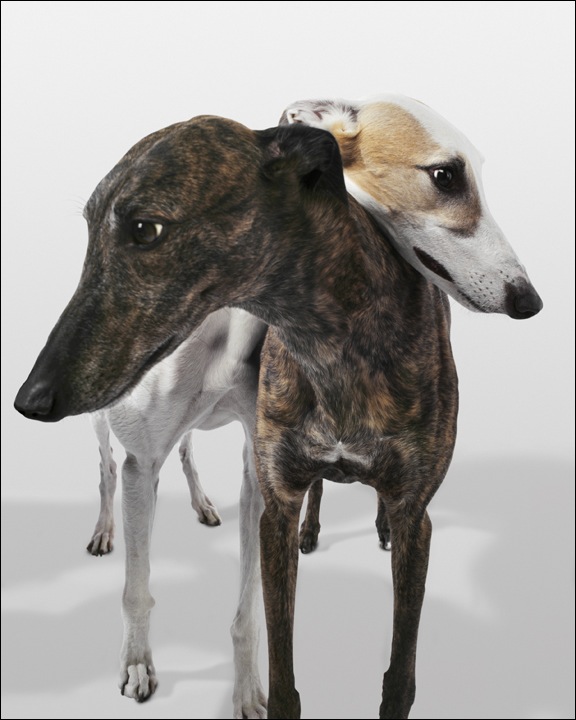
There is a story in my forthcoming collection, SURVIVAL SKILLS, that involves a rescued greyhound and a troubled woman. Over the course of this story the two learn how to heal each other. I hoped to strike a chord with this piece, to bring awareness to dog racing and the lasting damage this industry inflicts on helpless creatures.

There is no need here to cite the grim statistics, the number of race dogs that are maimed or destroyed. The fact that these animals are kept in cages is more than enough to shame us. Thirty-eight states, acknowledging this abuse, have banned commercial dog racing, which begs the question: Why is it allowed anywhere? Why does anyone have the legal right to profit from this egregious “sport?” I cannot understand why there isn’t a nationwide ban on dog racing, but if we can’t rely on our leaders, we must turn to ourselves to do the right thing.

Public figures wield untold power. They can unify the population or they can further weaken it; they can promote compassion or they can fan aggression. Last week, encouraged by a television show host, thousands of people swarmed Chick-Fil-A’s in support of their COO, a man who has voiced his opposition to marriage equality. The effect was stunning. For equal rights activists and same sex couples it was a disheartening event, and I couldn’t help but wonder how many people would have patronized these stores that day had the COO spoken out in favor of allowing every citizen the right to marry and enjoy the benefits that marriage confers.

But mostly I thought about greyhounds. I wondered what would happen to our remaining racetracks if the issue of dog racing inspired similar fervor. What if the next time a greyhound race was scheduled, not a single spectator showed up? Ticket sales: zero.

Now that would be something to cheer about.

A Born Skeptic

A born skeptic, I find myself fascinated with optimists. I assume there’s a genetic component, and a reasonably secure childhood probably helps. But how do they persist? That’s what baffles me. Given the headaches, heartbreaks and horrors that attend human existence, how do these people sustain their cheerful dispositions?

Insuperable strength, maybe. A faculty for pulling themselves from the pit as many times as required. Or a stubbornness, a flat-out refusal to confront the unpleasant. Perhaps they don’t quite feel the unpleasant. It could be that pessimists are born with thinner skins; they bruise more easily and they likely don’t last as long. Like blue-eyed blondes, those of us who see the glass half-empty might one day be bred out of the population, replaced with tougher versions of humanity.

Optimism is defined as the tendency to expect the best and see the best in all things. Wow. Imagine that.

“I think I was born that way,” says an optimistic friend of mine, “but I work on it, too. I don’t allow myself to mull over the bad stuff. I do something else. Anything.” Ah, I thought. Distraction. You throw yourself a ball to run after.

I know I don’t throw myself enough balls. I am seduced by the pit, can feel it pulling me in. If pessimists anticipate the worst, by accommodating agony, sitting with the intolerable, perhaps I am preparing myself for annihilation. The worst is death, right? By the time I arrive there, I might be less afraid than those who are chasing balls. But maybe not. You see how easily I fall back.

My partner is used to my gloomy views and likes to poke fun at them. Often we laugh over one of my bleak remarks. Occasionally, though, her patience will wear thin and she will say, “Stop it. Stop going there.” And I will; I’ll acknowledge the sense this makes and I will attempt to correct my wrong think. It feels like stepping into another world. I can’t stay, but I enjoy the brief visits.

I don’t believe that optimism can be acquired along the way. I think it’s like religious faith. There are those who readily believe in God and those who might want to but can’t. I do my best. And it’s not like I don’t love life. I love it beyond expression. I can’t wait for the sun to come up and I never do. I spring out of bed. Dawn, bird song, a fresh chance. Every day a new chance to get it right.

I envy those who live on the bright side, I admit it. If I were choosing a business partner, I’d certainly select from the positive team. She’d keep the vision; I’d keep the books.

But for a dinner partner? Give me one of my own.


Timely Gifts

A friend of mine is turning sixty, and she is not having an easy time of it. I want to give her a birthday card that will lift her spirits, remind her of the blessings that come with age. Looks like I’ll have to create one myself.

If I were searching for something crass and mocking, I’d have no trouble at all. There is a plethora of cards that poke fun at getting older, most of them illustrated with repulsive photos or cartoons. Somehow it’s easier for us to laugh at old age than to say anything nice about it. I do have a sense of humor, and there is no denying that laughter is good medicine. I just wonder why the difficult and tender process of growing older has become a joke.

“I hope I become a sweet old lady,” I once told a friend, “and not a cranky one.” He looked at me and shrugged. “You’ll just become more of what you are.” I’ve thought often about that remark and I believe he is right. How we grow is up to us. We bestow on ourselves our own largess or meanness, and we are all, every moment, setting an example.

There are elderly people who routinely disparage their lot, reminding anyone who will listen that being old is a cruel affliction filled with pain and devoid of pleasure. Is there anyone at any age who wants or needs this message? Isn’t the expression of these thoughts a cruelty in itself? If we can’t serve as inspirations, might we at least offer comfort?

“Dirty Harry” was once a favorite movie of mine. Now it is far too brutal. My friends tell me that they have become similarly sensitive. As our actual skin thins, so does our emotional armor. This keen awareness of the suffering of others strikes me as something of value.

It’s not so easy, in our days of youth and vigor, to experience this sort of empathy. Compassion seems to require a certain number of years. From it flows kindness, another gift of age. With these two qualities, the world around us expands, becomes suffused with a sudden heart-breaking beauty for which we are inexpressibly grateful. Compassion. Kindness. Gratitude. For some people, these hard-won talents are all the compensation they need.

A woman in her eighties gave me the best lesson in aging I ever received. Every time I see her she is wearing a gentle smile. I praised her for it one day, and she touched my arm and said, with perfect seriousness, “Oh honey, you have to smile—it makes you feel better.”

Going Home

This fall I am returning to my hometown for a visit. I haven’t been there in well over a decade. This decision feels more like a biological imperative, as if not returning would be unwise, even risky. Maybe all I need to do is make contact with the ground I grew up on.

Not that  I should be living there—I wouldn’t even be welcome. Your hometown is your birthright; when you leave it, you break a promise. Never again will you have free access. While you were gone, countless changes occurred and because you weren’t there, the changes are not a part of you. The town managed fine in your absence and now you are nothing but a tourist.

I left Burlington Vermont right after college, eager for the anonymity waiting for me anywhere else. Fame, romance—who knew what might happen? At the very least, I wanted hints of danger, some mischief to call my own. I knew I would make mistakes, suffer a few bruises, and I was ready for them. I don’t remember giving my hometown any last looks from the bus window. I don’t recall the sadness, only the exhilaration.

Over time, I did find some of what I was after. Several of my decisions were unwise and I will not tell you that I don’t regret them. What does feel absolutely right is the place I now call home. Most of us, by chance or choice, wind up living in a place we like. Our hometown is in our genes, but the town we choose is the town we belong in. For any number of reasons, the conditions suit us and we take root.

My mother’s life resonated with her environment, molecules in her body corresponding with molecules in the flora and fauna around her. In the womb, I too resonated with her world and when I was born this world became mine. I was a new resident, instantly accepted and approved. I had unconditional love from the ground up.

Which is why returning for a visit—especially after so many years—isn’t easy. I know that nearly everything will be unfamiliar, that the houses will be smaller, the roads shorter; that  buildings and trees and fields will be missing altogether; that the dirt path I traveled to the beach will exist only in my mind. I will not be able to find my way around and the more places I go the more puzzled I’ll become, and as I move through this town I’ve lost, bits of my youth will keep skirting away: golden birch woods, painted lake turtles, long rows of icicles shining in the sun; the taste of the tiny strawberries that grew beside the railroad tracks; the leopard frogs that jumped ahead of me when I walked through tall wet grass; the clean cotton smell of my boyfriend’s shirt collar; the hay loft we found one day, the dust motes floating in its wan light.

These things happened to me. From here, I can see them clearly, can remember each path and tree, can smell the lilacs and the wet fall leaves. When I revisit my hometown, I’m not sure I was ever there at all.

2007 A.D.

When Mt. Vesuvius erupted in 79 AD the sight of that monstrous mushroom cloud bewildered the citizens of Pompeii. For weeks there had been small quakes and tremors, which were common for the area, and people had gone about their business without much concern. Not until the sky began raining pumice did people take notice.

Too weak to run, the old and sick were buried in their homes. The rest of the townsfolk stumbled in the dark over rising mounds of fiery pumice, blankets tied to their heads. No one knew where to go. Those in houses ran into the streets; those in the streets took cover in buildings; people in boats rowed madly for shore; people on the shore sprang into boats.

Some railed at the gods, others begged for mercy. Exhausted and choking, many gave up and took shelter where they could: slaves and bureaucrats, dogs and dowagers, all crouched together in their last hours on earth. Some managed to reach the city walls and even beyond, and as the falling debris began to let up they must have thought the worst was over.

It wasn’t. The mushroom cloud finally collapsed, sending six surges of ash and searing gases down the mountain. The first surge vaporized the flesh of every living thing in Herculaneum, the fourth surge decimated the people of Pompeii: those who were fleeing, those who were hiding, those who had already suffocated.

In the weeks and months after the eruption, many tunnels were dug into the ruined city. Robbers and treasure hunters risked their lives to take what they could: bronze, lead and marble; tools and trinkets, anything of value. By the time they were excavated centuries later, some of the grandest homes were found empty, their frescoed walls scarred with holes.

In 2007 the US housing market collapsed. Like the eruption of Vesuvius, the destruction  was swift and incomprehensible. There were stages, warnings, but these were largely ignored. The market had faltered before and no lasting harm had come of it. A wily few understood what was happening and stole away in time. The masses were trampled.

Officials issued ominous threats. Our financial institutions were “too big to fail.” For our own good, we had to make a sacrifice, we had to appease them. We did and they weren’t. Our banks turned their backs on us.

For Sale signs are still popping up, in neighborhoods both modest and posh. Formerly desirable developments are now pocked with weeds and stagnant swimming pools. Forced from their homes, crazed citizens are stealing their own countertops, hardware and fixtures before trashing the houses they once loved. Who could have predicted it? Homes selling for a dollar. Cities filing for bankruptcy. Disparate relatives elbowing under one roof. People with six-figure incomes fleeing in the middle of the night.

We are living on precarious turf. There is no telling what stage we are in, how many more surges we can expect. We no longer trust what we are told. We move cautiously, using our own instincts. We give thanks for what we still have.

In Naples, Italy three million people live on the edge of a volcano. They know the danger, they can see it out their windows. How many times a day do they cast their wary eyes on a mountain that might be their undoing?

For the three hundred million people in this country, life is not so different.

Great Examples

When I was in college I spent two semesters in a creating writing seminar. We had been selected for this course based on our writing samples. I must have shown a little promise, at least to the professor, though you wouldn’t have thought so had you listened in on one of our sessions.

To be fair, nearly everyone in that class was criticized, and savagely—that is the way of writing seminars. You compose a poem or story, read it aloud to a pack of students and one by one they savage it. This toughening process is supposed to be good for you, in the long run. Only a couple students emerge unscathed. I think of these seminars as being identical in universities around the world. There is one gifted poet sure to achieve stardom immediately after graduation; there is another student who has lots of rough talent but seems to care less (this is the one the professor has a crush on); there is a person who writes painstakingly adequate prose; there is a girl who cries.

Did I learn from this class? A couple things. I clearly remember two comments made by the teacher after I read a poem about the sea (comments that elicited much laughter, by the way). In this poem I compared an eel to a phallus, using three examples of the likeness, and the teacher remarked, wryly, that I had “done that poor eel to death.” Which was true. In the same awful poem, I wrote that a sea urchin was “swaying, and praying” for a fish to swim past and the professor put his arms on the table and cradled his head in them and said, “Never ever ever make a sea urchin pray.” Which was also true. I deserved what I got that day.

Aside from those lessons, I’m not sure I took anything away from that class but scars. I actually wound up majoring in English Literature because I was afraid of the math requisites for my preferred interest: marine biology. In retrospect, I am certain that this writing seminar was more brutal than any math course. Creative writing classes taken in college are especially harrowing as kindness is not a foremost concern in our callow youth.

The question has been bandied about: Do creative writing classes really teach people how to write? To a degree, yes. Seeing where we have failed can be very helpful. What can’t be taught is the knowing, the writer’s ear, the certainty one feels when a phrase is exactly right.

I am a better writer now than I was in college, an evolution I attribute mainly to continued effort and constant reading. I read authors whose skills take my breath away. When we read, we learn. All those great examples sink in over time. Which is how life works on every level.