Greatness

58c037beb5d3b.image

Greatness

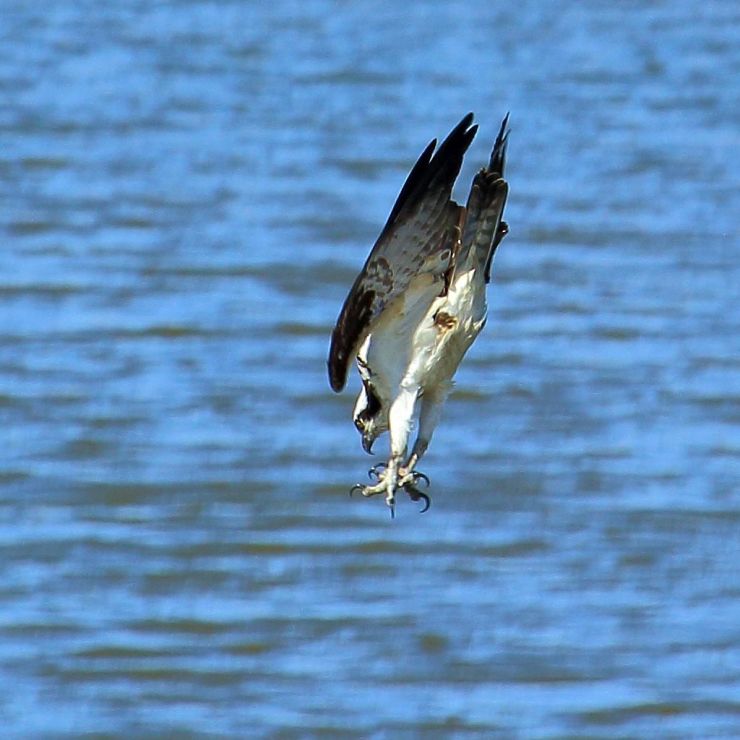
An osprey dives over and over,
as many times as it takes to stay alive
and become incidentally superb.

Driving down the road near my house
I see them flying, a stunned fish in their claws,
as if nothing could be more ordinary
than a bird bringing home dinner.

Wings or brains,
we work with what we have.
I can’t snatch a meal from the ocean
at 50 miles an hour,
but I can plant a garden,
make stories out of thin air,
learn the difference
between an aspen and an alder.
Minute by minute,
even I can be splendid.

Alabama’s Abortion Bill

2000

My questions, unanswered, hang in the heat. I want to know why change comes hard in the Deep South, why generation after generation accept the religious precepts they are handed as if each day were not studded with evidence that their god is neither just nor caring. I want to understand why making continual excuses for a cruel and capricious deity is easier than living without one, and why a skewed omnibus written thousands of years ago is considered an instruction manual today.

At this point, humanity appears to be a failed experiment. We have not learned to co-exist or curb our numbers, and the scale of our pollution has tipped the balance of life on earth. If there were enough of us committed to saving our species, we certainly could. Our brains are up to the challenge. Scientists could develop the means and the rest of us would only have to be decent human beings. Without the wedge of religion, we might achieve this. With minds to better our world and hearts to better ourselves, what do we need with deities and dogma that only drive us apart?

Alabama legislators just passed a bill that makes abortion a Class A felony. Women in this state have been stripped of the rights to their own bodies regardless of their situation. This legislation was approved by 25 white males and one female, the state’s governor Kaye Ivey. In contrast to her Christian rhetoric on the sanctity of life, Ivey opposes gun law reform, believing that Alabamians have the right to own assault weapons.

250,000 children live in poverty in Alabama, and the state ranks 49th in infant mortality. Meanwhile, firearm mortality rates put Alabama in the country’s top percentile.

If this bill becomes law, the consequences are obvious. Welfare programs will be forced to expand. More children will become victims of abuse. Impoverished women or those fearing exposure will have babies they don’t want and are not equipped to raise. Others will seek abortions out of state, adding to the risk and cost. Reputable doctors will discontinue their services while those with more dubious skills will set up facilities in unsafe locations and charge high prices. People across the state will exist in a miasma of secrecy and dread. All because 25 men and one woman decided that a woman’s body does not belong to her.

I don’t know how Governor Ivy reconciles her religious speak with her views on private ownership of semi-automatic weapons. I don’t know how she can allow adoption agencies to discriminate against the LGBT community. And what I really don’t understand is how a woman can take away the rights of other women and consider herself a beacon of virtue.

From her desk in the state’s capitol, Governor Ivy signed a bill—much easier than looking into the face of a frightened, desperate woman and telling her that what she wants does not matter, that you have eliminated her options. If you’re going to play God you need to keep a safe distance, as far as possible from reason and accountability.

Past Lives

photo-1519158337567-58e0d658ab72

Past Lives

Sometimes they are not dead.
Sometimes they just live far away,
and even if you stopped by for a visit
what words would persuade them
of your betterment, the worth
you finally achieved?
What could they do but listen and nod,
knowing what they know?


matt-atherton-567671-unsplash

Pet Portrait

IMG-7250

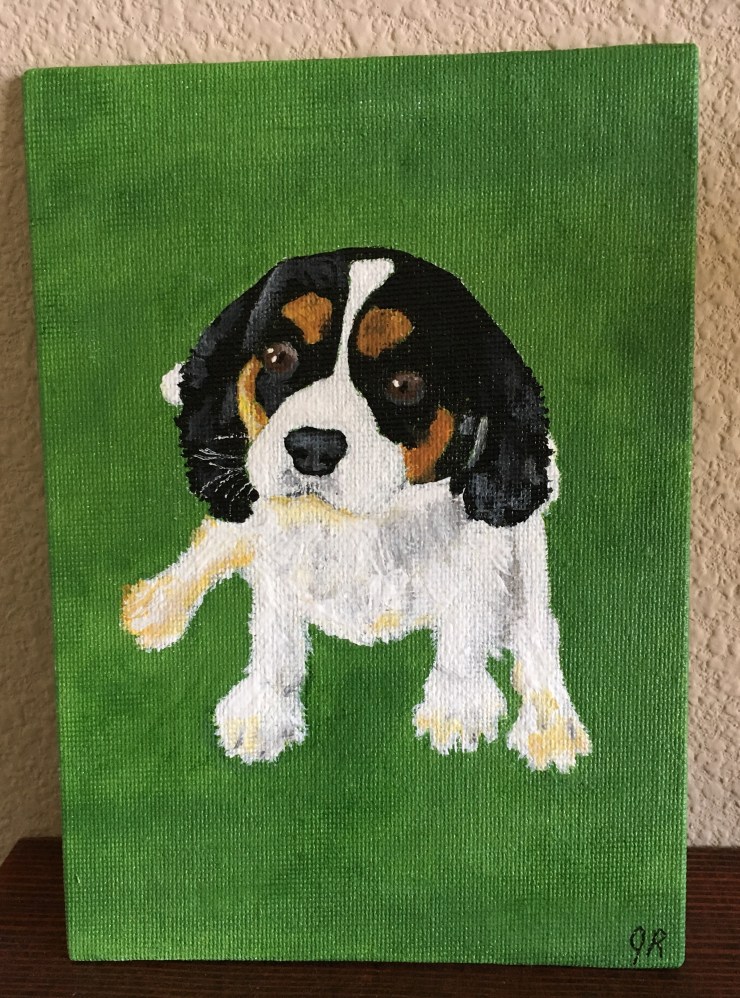
A dear friend commissioned me to paint this 5×7 portrait of his beloved spaniel. I began to love this dog as I rendered his image, which is something that happens every time I paint: with care and focus comes love. Instead of taking payment, I asked my friend to make a donation to the Animal Welfare Institute. In this way we all win. I am eager to do more of these portraits, each one a small contribution to the healing of this world.

The Spandex Tsunami

Am I the only person perplexed by the staggering popularity of Spandex? Why have so many women decided that tourniquet tight legwear is a wardrobe must? And not just slim women; women of all shapes and sizes pry on their pants each day and head out into the world, defiant as new parolees.

I don’t care if you have a rockin’ body, I don’t care if you don’t. I’m just tired of seeing so much of you. I never signed up for a free subscription to your ass.

“They’re super comfortable,” a friend assured me, beaming at her thighs, which were shrink-wrapped in a dark gray material splashed with giant yellow daisies. “They move with your body,” she explained. Indeed your body cannot shake them; you’ve eliminated the option.

Yoga pants. Compression wear. Training tights. Leggings. Designers have worked hard to come up with fetching names. Still promoted/justified as sportswear, the distinction has become meaningless.

There are a handful of competitive sports that benefit from tight uniforms. When winning is measured by a thousandth of a second, a second skin is the way to go. The rest of us have options, especially those who don’t know they do, who believe that compression tights and skinny jeans are tickets to freedom.

Every time I see a girl in tight jeans—which is every day, many times a day—I cringe a little, imagining the difficulty involved in sitting, bending and walking. A fashion that limits movement, impinges on circulation and inhibits healthy breathing is not a product that favors liberation and empowerment.

Remember Grunge? I do, even though it last just half a minute back in the early 90s. With origins in the Seattle area, Grunge fashion—for both men and women—was characterized by durable and cheap clothing often worn in a loose, androgynous manner to de-emphasize the silhouette. Make-up and excessive grooming were shunned; the whole point was to disavow the pitfalls of conformity and capitalism. Decades later, men are still wearing easy-fitting clothes; women, sadly, are not. I guess Doc Martens, roomy jeans and flannel shirts did not contribute to the objectification of the female form. If a women’s body is de-emphasized, who will want it? Who will care? What is it worth?

What I miss most from the Grunge period was the way women carried themselves. The sureness of their movements, the nascent confidence. Women were realizing at last that they owned themselves, or could. Who needed to measure up? For a brief period in our evolution, the female body was under autonomous rule as women adopted a brave new world of non-fashion and individuality.

A style that celebrates personal freedom is not a style that can be easily re-packaged by clothing designers, and so Grunge died out. Hoping to monetize the attitude, the fashion industry has tried at intervals to echo the lost look, offering distressed garments at high prices, but these attempts do not illustrate what Grunge was all about. The mainstream cannot adopt a subculture without losing its grassroots nature.

So far, I’m not seeing any sign that women are ready to peel off their Spandex and slip into something more comfortable. I’ve been waiting for that sea change, for some daring designer to introduce loose-fitting jeans for women. Imagine the culture shock, millions of females moving freely through their days, empowered by the anonymity of modest, comfortable clothing. Of course, there is still the matter of make-up, hair dye and Botox, but we have to start somewhere.

7-Le-Fashion-Blog-7-Cool-Ways-To-Wear-Baggy-Jeans-Crop-Top-Sneakers-Street-Style-Via-Womens-Wear-Daily


Three Ghost Stories

images

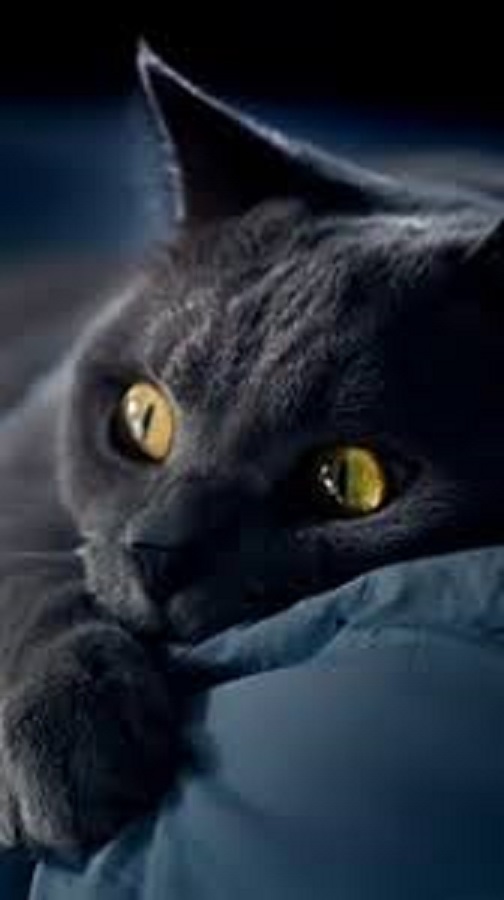
Occasionally, always in the evening, my cat will turn her head and stare at something I can’t see. She will follow this invisible entity with her eyes as it moves, apparently, along the wall just below the ceiling. She does not seem alarmed by what she perceives, just keenly interested. After a moment or two, she will blink and look away, settle back into my lap. Whether the object of her attention disappears or she simply grows bored with it, I will never know.

Two of my previous cats displayed this same behavior, and several people have told me that every now and then their cats are likewise enthralled. “It’s their eyes,” a friend says, “those elliptical pupils. Their eyes absorb light and then reflect it—like headlights on a road sign. Cats see a whole world we don’t.” I have no idea what my cat sees in the dark; I only know that sometimes, in my living room at night, we are not alone.

A couple years ago I met a woman at a party, a grief counselor named Anne. I liked her calm, her attentiveness; I thought she was probably very good at what she did. We fell into an easy friendship, and one day over lunch I mentioned my cat and her odd way of peering at the ceiling. Anne picked up her sandwich. “They’re out there, alright.”

“Who?”

“Ghosts,” she said, “spirits. Whatever you want to call them.”

I took a swallow of my drink, studied her a moment. “You seem pretty definite about that.”

“It was the kids,” she said, looking up at me. “When I started counseling kids, I learned a lot. You wouldn’t believe how many children see ghosts.”

I stopped chewing. “You mean like the movie? Like ‘I see dead people’?”

“Something like that,” said Anne, nodding. “They see their relatives—grandmothers, brothers, fathers. People who have died recently.”

“Wow,” I murmured. “They must be terrified.”

“That’s the thing. Most of them aren’t afraid. They’re not really haunted, these kids. It’s more like they’re…visited.” She paused, considered. “It sounds like their parents, grandparents, whatever, just sort of appear and hang out for a while.” Her eyes widened. “It’s like the kids don’t know that this isn’t supposed to happen, so it does. They allow it.”

“How old are these kids?”

“Six, seven, eight. I’ve talked with four-year-olds who’ve seen ghosts.”

I paused, reflecting on this possibility, and then my mind snapped shut. “Lots of kids have imaginary friends. Don’t you think they might be imagining their relatives, willing them to be?”

Anne nodded. “Some of them, maybe. But Jean, the consistency is amazing. I’ve asked these kids the same questions on different days and they’ve answered exactly the same way. Their recall blows me away.”

“What about your adult clients? Do they ever see spirits?”

“Rarely. In eight years I’ve spoken with just three.”

“I wonder why it’s so common with children.”

“I’ve wondered about that too,” Anne said. “I think it’s because they’re closer to their time of birth. Closer to creation.” She paused, considered. “They really do live in a whole different world. They don’t understand how things work so everything amazes them.”

“Or terrifies them,” I add, thinking of my own childhood.

Anne shrugged. “Well that’s true, but trust me, they’re a lot more afraid of real people than they are of ghosts.”

I have heard—I suppose we all have—a few stories about unexplained encounters: sounds or feelings or visions beyond the margins of daily life. I remember an especially convincing account told to me by a math professor. We were sitting at her kitchen table while our spouses chatted outside. The house we were in had once been inhabited by my partner’s grandparents, and the property held many happy memories for her. This teacher—her name was Elizabeth—told me that she and her husband loved the house and were delighted we had come for a visit. I asked if she any children, and she said no, conceding that it was a big house for just the two of them, especially since her father had died. “He lived with us for several years—he died four months ago.” I expressed my sympathy and she smiled. “Well, we had a nice goodbye.”

I looked at her quizzically and she folded her arms on the table and told me something that made me stop breathing. For three nights after his death, she said, her father had visited her. They had sat at this table—he in the chair I was in—and talked about life, about things they had not shared or explained or apologized for before his death. She said it was the sweetest time, the easiest time, they had ever spent together. After three nights, she went on, everything they needed to say had been said; they both knew it. “He didn’t come back after that,” she finished, looking up from the table.

I couldn’t understand. “You talked? Like we’re talking?”

“No. Not like that. We talked without speaking.”

“Where was your husband?”

“He’s a dispatcher,” Elizabeth said. “He works nights.”

I must have looked dubious because she gave a shrug and said, “You’re not the first person who thinks I’m crazy.” She paused, regarded me straight on. “What can I tell you? It happened. You can believe it or not.”

That’s the thing with ghost stories, isn’t it? The listener knows they are not true, the speaker knows they are.

The last story I will tell you concerns an artist friend of mine, a first-rate photographer. Before she began taking pictures, she worked as a forensic psychic for a police department in Chicago. I didn’t know what a forensic psychic was until she explained it to me. At first I thought she saw the future and could predict crimes, but she said no, she could not do that and she doubted anyone could. She told me that she had gone to crime scenes—always homicide—where, in her mind’s eye, she sometimes saw the violence that had taken place. “It had to be a recent crime,” she added.

I was impressed. “Did you actually solve cases?”

“Oh yes. Several. Not so much the crimes that had taken place outdoors—I was better at seeing things that had happened in a house or apartment. I saw the people that had been involved and the police used my descriptions to find them.”

“Wow,” I said. “What a talent.”

She frowned. “Well, I don’t know how much talent is involved. See, after something violent happens there is residual energy in the space. Like images left on the retina when you close your eyes. After a time, that energy goes away and the room is just a room—at least that’s how it was for me. That’s why I couldn’t do anything with cold cases.”

“Have you seen this kind of stuff all your life?”

“No, thank god. It started in my twenties. I’d see a broken window, or a smashed-up car, and I’d get this glimpse of the people who had been there, the victims and the bad guys. I started working with the police when I was thirty-four. I quit after three years.”

“Why?”

She gave me an incredulous look. “Are you kidding? It was awful, seeing those things. It was wrecking my life. That’s why I left Chicago and moved to the country. It’s a whole lot nicer here.”

There is a photo circulating on the internet, beach sand viewed through a 250x microscope. It’s a stunning surprise, all those bits of beauty beneath our feet—honeycombs of coral, tiny crosses of glass, sea shells almost too small to be. Who knew?

As I writer, I am always trying to get to the bottom of things, the hidden, ever-retreating truth. There’s so much going on that we can’t see. In their possibility, the stories I’ve been told haunt me. I’m not saying I believe them, I’m not saying I don’t. I’m just saying.



Alabama For Beginners in bioStories

A big thank you to editor Mark Leichliter for featuring my essay “Alabama For Beginners” in bioStories. This is my fourth appearance in bioStories, and I am honored to be among the many talented contributors.

“bioStories offers word portraits of the people surrounding us in our daily lives, of the strangers we pass on the street unnoticed and of those who have been the most influential and most familiar to us but who remain strangers to others. We feature essays from an eclectic variety of viewpoints and seek out writers of literary excellence. We particularly look for work that offers slices of a life that help the reader imagine the whole of that life, work that demonstrates that ordinary people’s experiences often contain extraordinary moments, visionary ideas, inspirational acts, and examples of success and failure that prove instructive. In short, we believe every life displays moments of grace. bioStories wishes to share pieces of these lives and celebrate them.”