Great Deal On Strange Company!

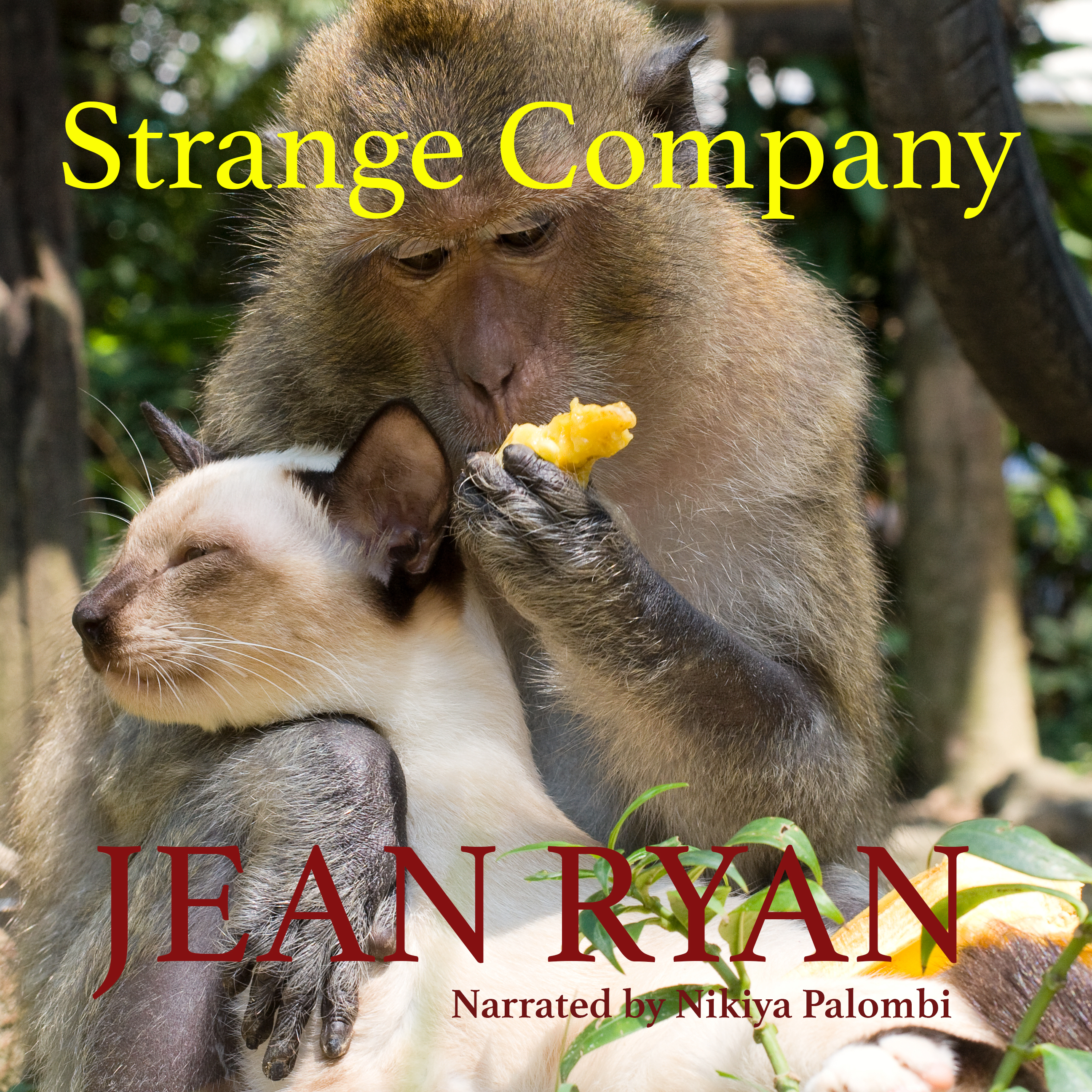
For all you nature lovers, the Kindle version of Strange Company, my collection of nature essays is on sale at Amazon. This is a light-hearted look at some of our most curious beasts, a cozy read for these cold winter months. Here is an excerpt from “Consider the Sloth.”

“The two main emotions in life are love and fear, and certainly there is ample evidence that animals feel both. I imagine that when the shadow of a raptor passes overhead, a sloth cringes in fear. What about the lesser emotions, the ones that don’t serve us—like worry? Does a sloth, with all that time he has, worry about eagles and jaguars? Or does he have more productive thoughts, which part of the tree he’ll dine on that night? Or is he, in some deep animal way, simply enjoying himself, his mind a movie screen of pleasant images: leaves, sky, dappled light. When thoughts are not needed, maybe animals are not burdened with them.

It is estimated that people have sixty thousand thoughts a day, a figure not as impressive as it sounds. These sixty thousand thoughts are the same ones we had yesterday and the same ones we’ll have tomorrow. In our day-to-day lives, we are not much good at thinking out of the box. A sloth hangs in one tree all its life and has no company other than the mate it couples with every fourteen months or so. With this scant stimulation, I wonder how many separate daily thoughts a sloth has. One hundred? Twenty? Three? I would trade my sixty thousand for a glimpse of them.”


What Thrills Me About The Deep Red South

Surging dolphins.

Ospreys carrying dinner.

Fried shrimp picnics on the banks of a bayou.

Box turtles crossing the yard.

Tree frogs on the window pane.

Corn snakes in the squash.

The size of grasshoppers.

How tall my basil grows.

The end of summer.

And the Make America Green Again 

bumper sticker I saw yesterday 

on a car whose driver I’d pay to meet.

Purifying Wind

PW Wind cover Mock up

I wish to thank D. Ellis Phelps, editor of the new anthology Purifying Wind, “an anthology of poetry to honor the vulture, many species of which are declining or in danger. Book represents the work of forty-three poets from six countries, many of whom are prize winning and Pushcart nominees. Poems enter the realm of many subjects including wonder, desire, love, aging, memoir, death and birth, and the natural world, to name a few. ”

I am delighted to have my poem “The Natural Order” included in this inspiring collection. Here is a video of me reading the poem. You may watch others authors reading their work on the Purifying Wind page on Amazon.


Greatness

58c037beb5d3b.image

Greatness

An osprey dives over and over,
as many times as it takes to stay alive
and become incidentally superb.

Driving down the road near my house
I see them flying, a stunned fish in their claws,
as if nothing could be more ordinary
than a bird bringing home dinner.

Wings or brains,
we work with what we have.
I can’t snatch a meal from the ocean
at 50 miles an hour,
but I can plant a garden,
make stories out of thin air,
learn the difference
between an aspen and an alder.
Minute by minute,
even I can be splendid.

The Common Lacewing

3722405531_6f628764c7_b

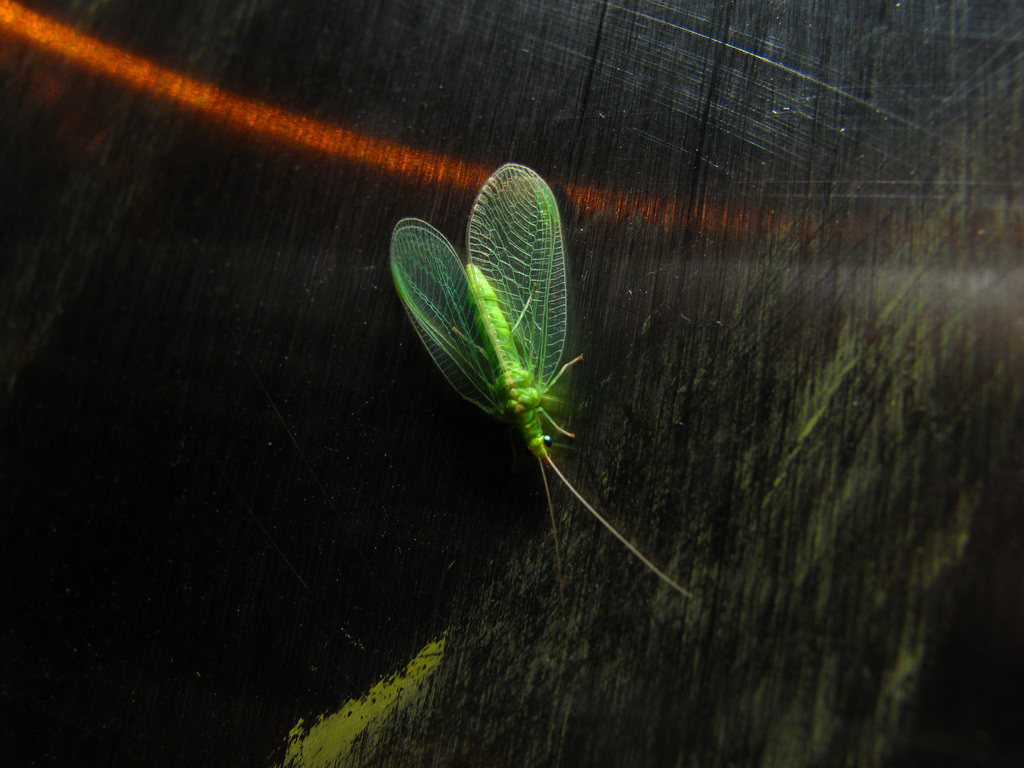
A green lacewing. Isn’t it stunning? The looping cellophane wings, the extravagant antennae, the eyes a pair of shining beads. And that streamlined body–in all the world, could there be a truer green? Imagine taking flight with those diaphanous wings, sailing into darkness with see-through tackle. Maybe, with lives this brief, beauty pre-empts sturdiness.

29171398902_eb4c749fb6_b

Adult lacewings are nocturnal and fairly passive; most feed on nectar, pollen and honeydew. At some point during their four-to six-week lives, they find a mate, touch antennae, mingle mouthparts, and finally join abdomens, jerking and vibrating in a vertical position. The female soon lays 100 to 200 eggs on foliage, ideally with plenty of aphids nearby. Each dainty white egg is secured at the end of a filament about a half inch in length. After a few days the eggs hatch, molt, and the emerging larvae climb up the stalks and into the sunshine. Immediately they start feasting on whatever they can find: aphids, mites, caterpillars, other small bugs and eggs. These creatures are so proficient at dispatching aphids that lacewing eggs are shipped to gardeners and farmers for use as biological pest control.

9050112299_9b5336058e_b

Unlike humans, who are most comely in their youth, lacewing larvae are not what we’d call attractive. Their humpback bodies are swollen in the middle, and tufts of bristles protrude from their sides. These bristles are neither armor nor adornment. They are there to help secure dead victims and other debris to the backs of the larvae. As the gruesome collection grows, it serves as camouflage from birds and other predators, while offering the host cover for hunting.

Green Lacewing Nymph (Chrysopidae)

Lacewing larvae tend to swing their heads from side to side as they search for food, seizing what they find with their strong mandibles and injecting it with paralyzing venom. The hollow jaws then draw out the body’s fluid, after which the corpse is tossed onto the heap of other luckless prey. Occasionally these rapacious predators, also called aphid lions and aphid wolves, will even bite humans. In two or three weeks nature cues them to stop eating and start spinning cocoons, from which adult lacewings appear five days later to repeat the cycle.

Fearsome youth or fragile beauty–makes no difference to the common lacewing, who is always both, forever coming, forever going, a crawler with notions of flight, a flyer with flashbacks of sunshine.

Photo by mbrochh on Foter.com / CC BY-SA
Photo by dreed41 on Foter.com / CC BY-NC-SA 
Photo by Pasha Kirillov on Foter.com / CC BY-SA
Photo by Marcello Consolo on Foter.com / CC BY-NC-SA