What Are You Afraid Of?

124906800_a335b9edae_o

Maybe you’re like me, anxious more often than not. Maybe you’ve read about that pair of panic buttons in the brain called the amygdalae. Troublesome though they may be, we’d be lost without them, unable to perceive and react to danger. The amygdalae are the gatekeepers of the limbic system, the brain’s most primitive region. Ever on guard, they make continual connections with other parts of the brain, and when sufficiently aroused, they alert the hypothalamus to initiate the “flight or fight” response; within seconds our hearts pound, our mouths go dry and our bodies are flooded with stress hormones.

It’s an impressive chain of command. All information taken in by the senses is first sent to the thalamus, which then relays this information to the appropriate sensory cortex. The cortex involved then evaluates the stimuli and assigns a meaning. If the meaning is perceived as a threat, the amygdala is engaged and produces the corresponding emotional reactions.

But a new feature of the process has recently been discovered. The cortex does not receive the entire message from the thalamus; a portion is sent directly to the amygdala, a shorter route that results in instantaneous alarm. This is the reason we see a coiled rope and think snake! An inability to react quickly could have dire consequences, so this shortcut confers a biological advantage. It is also the reason we have such difficulty overcoming phobias and anxiety attacks. The quiet messages sent by the rational cortex cannot be heard above the roar of our emotions.

There’s more. Scientists have also learned that the amygdalae can actually grow. Enlarged amygdalae have been found in children repeatedly exposed to trauma. Not only do these structures increase in size, they become more efficient at transmitting fear responses, the neurons involved developing more synapses to accommodate the volume of messages received. By the time we are adults, we are hardwired for the anxiety we were destined for.

Who can say where it starts, though it seems probable that anxious parents, particularly mothers, give birth to anxious offspring. A mother consumed with fear will pass these feelings onto her baby, right along with the effects of her diet and sleeping habits. How many babies are born to mothers who are serene, capable and financially secure?

Like many people—most people?—I did not have an easy childhood; in fact, I was routinely abused, a prisoner in my own home. That is the curse of childhood: adults can hold you hostage and get away with it. The only place I felt safe was outside, where I made forts out of pine boughs and lost myself in the marvels and mysteries of nature.

I grew up anyway, like we all do, not knowing how ill-equipped I was. When the panic attacks started, in my early twenties, I managed them with the only means I had—Jack Daniel’s-laced coffee and the Valium I received from a friend who dated doctors, just enough to get me on the subway so I could keep my job. Who else was going to pay my bills? Walking from the subway stop to my workplace, I would stop several times and study my image in plate glass windows, making sure I was there.

Eventually this free-floating anxiety crystallized into a fear of doctors and clinical settings—I must have felt a loss of control in these situations. This led to a skyrocketing of my blood pressure, which led to a fear of having it taken. I have yet to overcome this phobia. Fortunately, I have an understanding doctor who accepts the readings I take at home. I’ve actually come a long way—there was a time I couldn’t even look at a hospital, or a blood pressure cuff. Beyond this phobia, I am also prone to obsessive thoughts, a hallmark of anyone intimate with anxiety.

Therapists? I’ve tried a couple. Can’t say they helped me. I’d look at them and wonder what to divulge, and when, and how any of it mattered now. I wanted to believe in their power to cure me, but I couldn’t. I feel the same way about religion.

Exposure therapy, flooding, CBT, EFT, ACT—I’ve ventured most everything. I’ve also read every how-to manual I could find on the subject of anxiety and dutifully filled out the accompanying worksheets. I can’t say that any one avenue or book has been particularly useful, though cumulatively I suppose I’ve benefited from the effort.

Three years ago my doctor suggested Paxil. I gave it a go, not expecting much, but that little white caplet has made all the difference. Paxil offers a measure of objectivity by making me feel as if I am observing my fear instead of being pummeled by it. There are several SSRIs on the market and some are more effective than others depending on the user—we are all different.

We work with what we have. If genetics and trauma have given us a larger than normal pair of amygdalae, there are ways to mitigate the effects. I’d like to think that a drug is not the answer, but in fact it is. For me. As a good friend says, “Whatever it takes, Jean. Whatever it takes.”

Wow. I have just told the world, or at least anyone reading this, about my phobia (there are close friends of mine who don’t know I have one). I feel a little less burdened, a little more connected. We will ask people what they like or dislike, but rarely do we ask them what they’re afraid of. We need to talk about these things so that we can find each other in the dark and let compassion bring us together. The most frightening secrets of all are the ones we keep to ourselves.


Three Lessons I Learned From The South Napa Earthquake

!cid_66A738E3-D89A-4D34-8CDB-34648514C53F@gateway_2wire

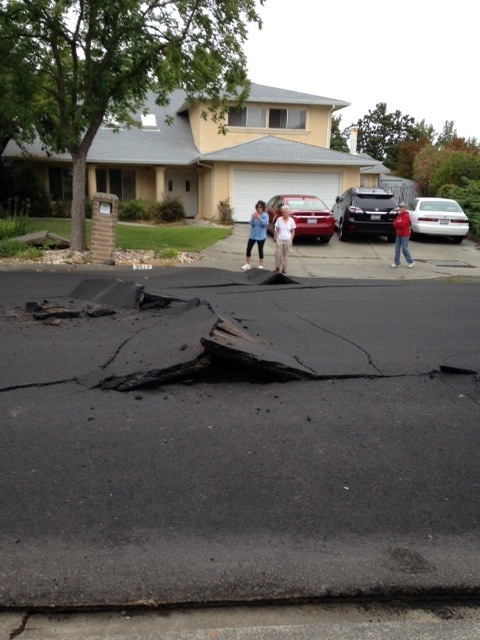
While the South Napa Earthquake was a meh compared to grand scale disasters, Hurricane Harvey has reminded me of the lessons I learned that day, which I am re-posting now. My deep sympathy to the victims and survivors of this catastrophic storm. In its wake, may love and good will continue to bloom.

1) You will never look at your home the same way again.

Homes are wounded, some more deeply than others; in fifteen seconds they have aged two decades. Most will need long-term care, the sort of attention that involves forgiveness. With enough money and patience, you can battle the mounting flaws. Alternatively, you can turn tender and live in peace with the wear and tear. You can accept your aging home the same way you accept your imperfect body.

2) Nature will win.

You know this now. Nature’s blows are indiscriminate and nonnegotiable. You have seen photos of the Mount St. Helens eruption, footage from Hurricane Katrina, but until you have been caught inside the roar yourself, flung like a rag doll inside your splintering house, you are not intimate with Mother Nature. Having survived one of her surges, you will love her no less and trust her no more.

3) You are not safe.

Security is an impossible ideal. This does not mean that you should go running full-speed down the knife edge of your life. Neglecting your belongings; falling into drink, debt or despair—these are not answers to your vulnerable condition. Instead, you must shore up what you can and live with what you love: people, plants, animals, objects. However fragile or fleeting, whatever you hold dear graces your days and justifies its place in your life.


What is a Writer Worth?

.
What if writers were paid for their effort instead of their product? Many skilled professions involve more labor than financial reward, but writers seem particularly short-changed. Inventions, fine pieces of art, these can still command appropriate prices. Authors cannot negotiate book sales, cannot hold out for the highest bidder. Not only are print editions on the wane, digital copies are continuing to lose value. Ninety-nine cents has become a common price tag, and authors are often compelled to promote their books by giving them away for free.

What are writers worth? What would be a fair wage? A landscaper friend of mine told me last week that he always charges by the hour, not the job, as unforeseen problems can cause delays. This makes sense, and I admire him for his business acumen, for insisting that he be treated fairly. SURVIVAL SKILLS and LOVERS AND LONERS, my short story collections, include stories that were written over several years, and some of these pieces took months to write. One of the stories actually started out as a novel that grew flabby; I wound up scrapping about forty thousand words. Untold hours went into the making of these two books. Even if authors earned minimum wages, most would be rich beyond measure. Writers would rule the world.

Hard labor, that’s what good writing is. A dedicated writer is a slave to herself. Unlike inventors, who achieve their goals by fixing failures, writers continue on faith, not knowing if their revisions are improvements. No one can help them. Sentences are paths, and writers must blunder down one after another, hoping they have made the right turns and will not wind up lost. The journey is loaded with trip hazards, and writers must avoid them all: the pitfalls of clichés, the slopes of sentimentality, the sloughs of despair, the dreaded stasis of writer’s block. If an author is lucky enough to arrive at her goal, to finish a story she is pleased with, she must then work to acquire readers. For authors, who are generally introverted, marketing is far more onerous than writing. It is not a labor of love, and there is no end to it.

Writing is a three-step process: seizing an idea, putting this idea into words, and then into the right words. Of course, the right words for one author may be, will be, the wrong words for another—there are any number of ways to write, and mediocre writing can result in stunning sales. Writers must work to please themselves, knowing their stories may never be appreciated or even read.

I will work on one sentence for hours if need be, shuffling the words around and around until they click into place. As I wrangle words, I often think of Raymond Carver, who considered himself not a minimalist but a “precisionist”—what an apt term to describe the love he brought to his craft. Carver knew he’d never achieve perfection, but he kept reaching for it anyway, struggling year after year to bring out his best.

You can’t put a price on a good book, but you can buy one for under a buck. Most writers will never produce the stunning book they envisioned, nor will they reap the monetary rewards they have earned. As readers, we can at least offer them one dividend: the courtesy of a review. Reviews posted on Amazon or Goodreads cost nothing and require scant effort. Just a couple sentences is all it takes to let a writer know her words have not vanished.

Kitchen Elegy

1403369317bjq9m

I need to write a cook book, a friend has told me. By this she does not mean recipes, she means secrets. The kind only cooks know.

We worked for the same catering company, this woman and I, and she wants me to tell our story, to tell the story of all cooks. She wants me to lay bare the work we did so that someone out there might acknowledge it.

I understand this. I spent sixteen years as a line cook and four years as a caterer, and when I finally left the cooking profession, scarred and exhausted, no one noticed. After two decades of hard labor, I wanted to see some mention of it: a note in the local paper, a plaque with my name newly etched. All those thousands of mouths I fed—didn’t they add up to anything? They did not. Like a plate of food, I was there and gone.

Line cooking is a sort of magic act. Before you are eight sauté pans, smoking and bubbling, and a grill loaded with meat and fish in various stages of readiness, and somehow, amid the firing of orders, you are delivering every one of these dishes in the right combination at the right time. You have no idea how you’re doing this; you’re moving too fast for thought. Suddenly a cowering server appears. He has dropped a plate and needs a re-fire. For a second you look at him without comprehension, and then a murderous rage floods your body. Your tickets have turned into a blizzard. You will not find your way back.

I still have cooking nightmares, endless dreams in which I can’t get my food from the stove to the warming lamps. There is a white scar across my knuckles, a wound from the blade of a food processor. My forearms are blemished with old burns, most of them from oven racks. I can point to each one and tell you which kitchen it came from.

And then there were the other accidents. Walk-ins gone warm. Hours lost replacing a ruined soup or looking for Band-Aids swallowed in bread dough. Never a lax moment in the cooking arena. I recall the day I pulled on one of those giant oven mitts and felt something fast and urgent streak down my arm. I screamed and flung the mitt across the kitchen, and the mouse it had harbored scurried under the sink. I couldn’t blame the little guy—it had been a cold night.

While restaurants are riddled with trouble, catering can be even more dicey: the terrain is unfamiliar and access can be difficult. Once inside these grand homes, you have to figure out how all the high-tech kitchen gadgets work; it’s no good asking the trophy wife—she’s never spent time in that room. The most dreaded disaster is food shortage: one of your ten fruit tarts gets crushed on the journey, or a waiter breaks a wine glass near your mashed potatoes and destroys the entire dish. I don’t think people appreciate the scope of catering: how you have prepare the food, then load it into a van, then unload and cook it and serve it, and then wash all the dishes, all the pots and pans, all the forks and plates, every water goblet, wine glass, coffee cup and brandy snifter. And god forbid you should break anything.

While I was still working in restaurants, I often escaped into the walk-in, the only place a cook can scream. Sometimes I went outside, sat on an overturned bucket and just let my body tremble. One evening a rat emerged from a dumpster a few feet away and paused on the edge to study me, his black eyes bright and questioning. Comrade, I thought, looking back at him with tenderness.

Oh, there were high times, too—I wouldn’t have lasted without them. Magnificent victories. Indulgence. Hilarity. Cooks play as hard as they work. This is the bargain, the immutable law.

In the end, it wasn’t the cuts and burns that made me hang up my apron. Nor was it the work—I figure my body could have lasted another ten years at least. It was the incidentals that finally undid me, the avocado under my fingernails, the veal stock that wafted from my clothes and hair. I was sick of the whole soggy mess: the bloody bar towels, the greasy stove vents, the mountains of innocent carcasses. That’s what began to bother me most, the doomed innocent.

Very early one morning I was in a kitchen fileting salmon when I heard the unmistakable cheeping of a mouse in distress. My heart sinking, I went on a search and found the poor thing under the stove, stuck to one of those horrible glue traps. I tried to pull him off, but it was no use. Drowning, I thought, would be the least violent way to go, so I filled a bucket with warm water—it seemed kinder than cold—and slid the creature in. I turned away, unable to watch, and when I looked back a few seconds later, he was freed of the trap and swimming circles at the surface—the warm water had dissolved the glue! I cupped him in my hands and carried him out to the garden. Not long after that, I freed myself.

I’m employed at a plant nursery now, a gentle job that leaves no blood on my hands. Having traded my chef’s knife for a pair of bypass pruners, I’m happy trimming shrubs instead of meat, deadheading flowers as opposed to fish. Even if I wanted to return to those trenches, I no longer have what it takes.

Before enlisting in a cooking career, one might first consider the lexicon. Cooks work at stations “on the line” and orders are “fired.” Microwaved foods are “nuked,” well-done dishes are “killed,” food picked up late is “dead.” “Buried” is probably the most evocative term. This is what happens when a cook loses track of her orders, when the long row of tickets in front of her face no longer makes any sense. This affliction can strike at any time and there is nothing a cook fears more. Response is swift. The stunned soldier is shoved off the line and someone more fit for duty takes over.

Last week I dined at a posh Napa valley restaurant with an exhibition kitchen. I eyed the cooks with sympathy, remembering when this trend began, how much we resented being on display. Watching my kin in their natural habitat, their heads down, their arms in constant motion, I felt a surge of solidarity. I wanted to make eye contact, to show my support, but I knew they couldn’t risk it.